

“We want social returns, as well as financial ones.” — Sister Nora Nash, Sisters of St. Francis of Philadelphia
The Forty-First Floor
In 2011, on the forty-first floor of Goldman Sachs, a woman in her seventies sat across a polished table from some of the most powerful men in American finance and told them, gently but firmly, to remember the poor.1
Her name is Sister Nora Nash. She is a Franciscan — Sisters of St. Francis of Philadelphia, an order whose vow of poverty is more than a slogan. She had ridden up from Philadelphia with a list: rein in the executive pay, look after the customer, and tell the community the truth. The year before, the bank had paid its five top officers $69.5 million.2
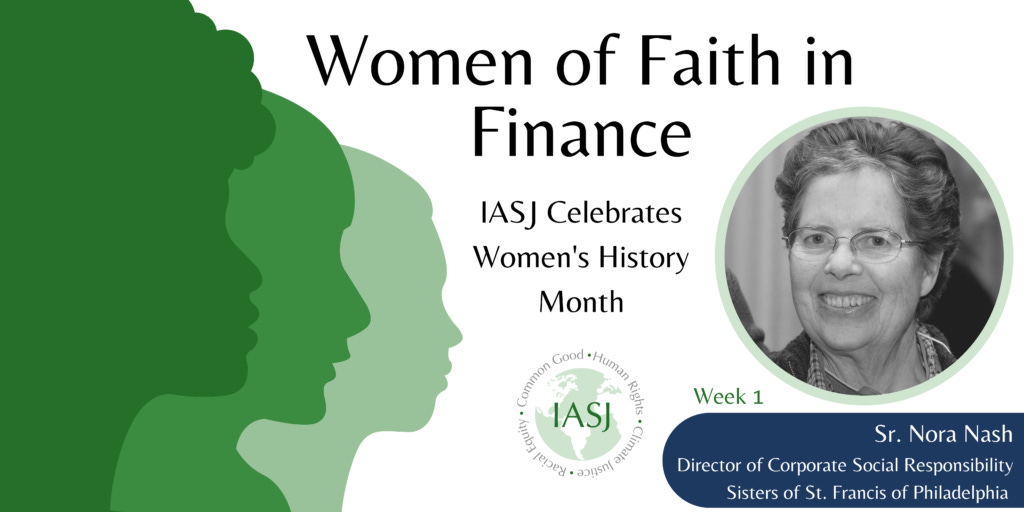
“When you look at the major financial institutions,” she has said, “you have to realize there is greed involved.”
She has done this for more than forty years. Through the Interfaith Center on Corporate Responsibility she presses some seventy companies a year: Wells Fargo on their fake accounts, Exxon on the climate, Hershey on the child labor in its cocoa. Her resolutions draw real votes and her questions draw real answers. She sits at powerful tables. And she holds no grudge against the men on the other side of them.3
“I can’t exclude people like Lloyd Blankfein from my prayers, because he’s just as much human as I am,” she has said. “But we like to move them along the spectrum.”
Sister Nora is as pure a picture of conscience as American capitalism offers. And that picture rests on a fact so ordinary that it’s easy to ignore. To sit at that table, to file the shareholder resolution, in fact to be heard at all, Sister Nora Nash had to own Goldman Sachs shares.
She cannot ask a company to change if she doesn’t own it. To rebuke the bank, the nun first had to hold its stock, take its dividends, and profit from the very thing she came to protest.
Voice, in our system, is a property right.
The Screen
The tools Sister Nora has available today to pressure capitalism began fifty years ago with a good idea. And a war.
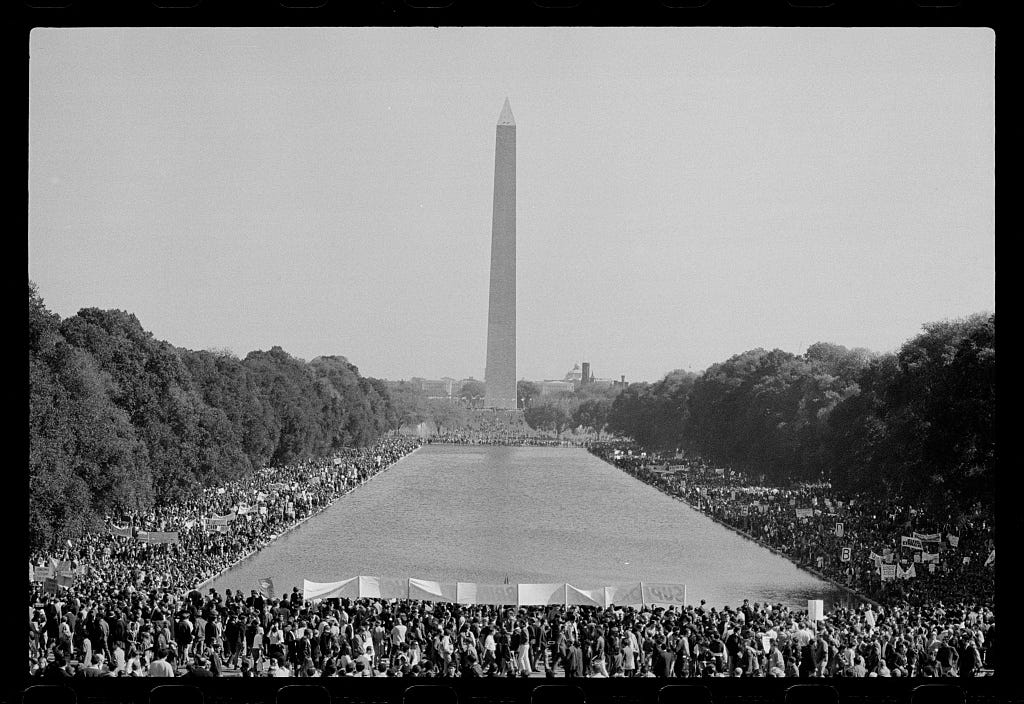
In 1971, two United Methodist ministers named Luther Tyson and Jack Corbett looked hard at their church’s money and did not like where it was going: into the war in Vietnam — the napalm and Agent Orange and the firms that made the weapons. So they built a fund that would avoid all of it. They called it Pax World — the first mutual fund in America to choose its holdings based on social conscience.4
That same year the mainline churches went looking into their own endowments and found the same thing. They owned the war, and apartheid besides. They founded the Interfaith Center on Corporate Responsibility, the organization Sister Nora works through to this day.5
Their instinct was old and plain: there are things a person of faith simply should not own.
But that instinct needed a method, and two decades later Amy Domini created one. With Peter Kinder and Steve Lydenberg she built the first social index: four hundred companies screened for conscience. It was the whole market but with the worst of it removed.6
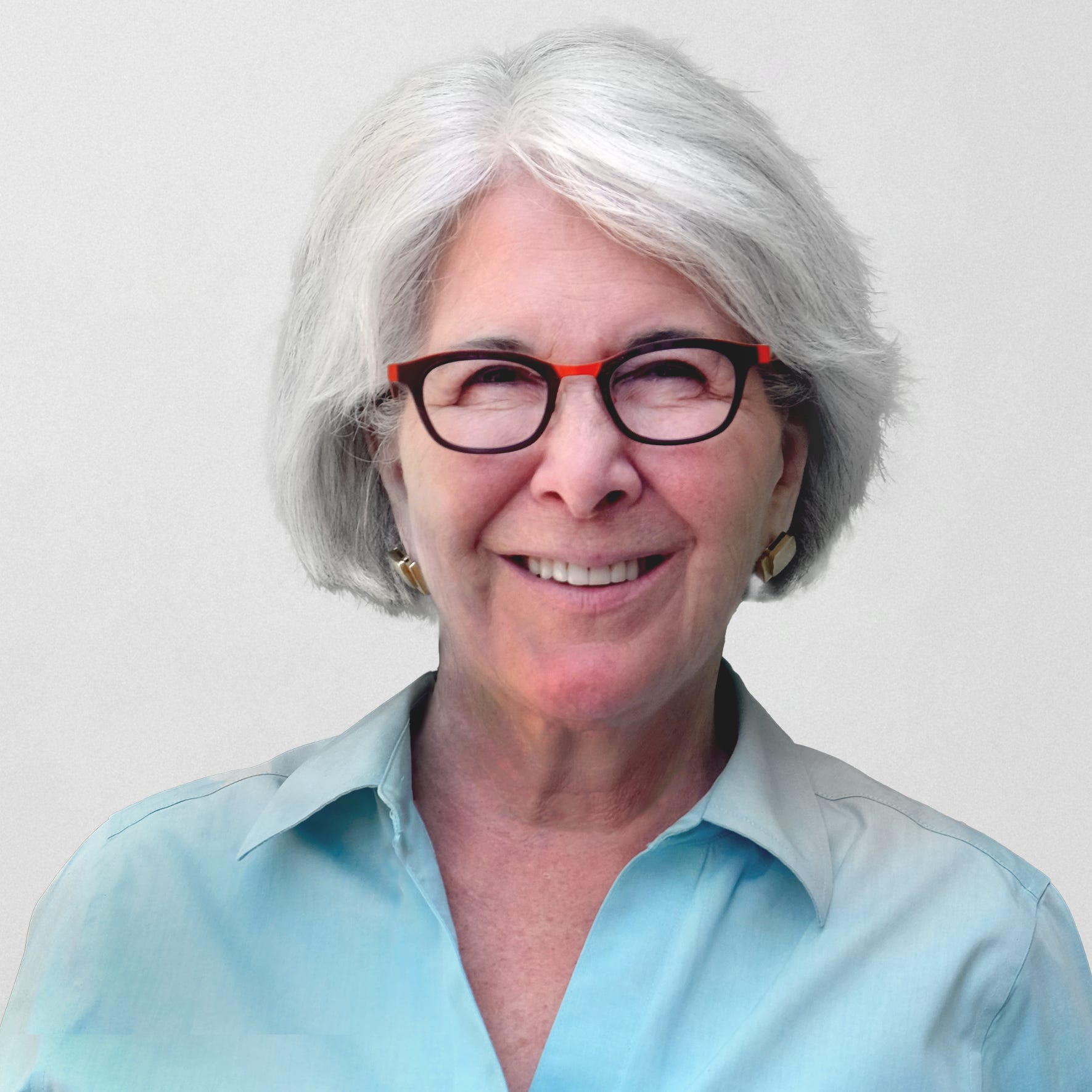
Where Pax was a single fund for the devout, Domini’s index was infrastructure: a benchmark, a product, something that anyone saving for retirement could purchase. She took an impulse older than the stock exchange — the refusal to profit from harm, the rule Wesley preached and the ministers had bottled — and made it investable.
Her single index grew into an industry: more than $3 trillion now sits in these funds, a market built from scratch across a single generation.7
Beneath the halo, the mechanism is straightforward.
The social screen reads the label on the product. It asks what a company makes — cigarettes, weapons, or thermal coal — and strikes the bad names out, then rebuilds the market from what’s left. It runs down the list of sins, more or less the one Tyson and Corbett drew up against the war, and takes the tobacco and guns away. It is a process of subtraction: start with everything, then remove. And it mostly achieved its intended purpose. The money came out of napalm, and it was right to.
A generation later, our conscience was still recruiting new advocates.
Caroline Levine teaches at Cornell, and a few years ago she read what her pension actually held: TIAA, the fund Andrew Carnegie built so that teachers could retire comfortably, about as respectable as money gets in America. And inside was $78 billion in fossil fuels, nine of it in coal.8 So she organized — three hundred professors and scientists, a complaint to the UN-backed Principles for Responsible Investment, a campaign with a blunt name, TIAA-Divest.
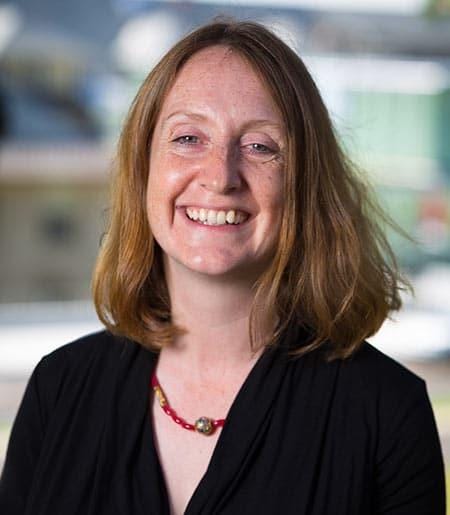
“What does it mean,” she asked, “to have a whole career dedicated to building conditions for students to live happy and flourishing lives — and then retire in a way that undermines and makes a mockery of that work?”9
Our Accounts
Vera and I did something smaller than Sister Nora or Caroline Levine, and far more common.
We scrolled the menu of mutual funds in our 401(k)s, we saw Vanguard FTSE Social Index Fund, returning around 13% annually for the last five years, just a smidge behind the S&P 500.10 And it had the word social in it, so we chose it, and felt a small, specific glow — the little chemical reward of feeling charitable.11
But in the thirty seconds of thought we put into investing our conscience, we never bothered to look at what the Vanguard FTSE Social Index Fund contains. Who does?
Here is some of what Vera and I purchased through our Social Index Fund:
UnitedHealth — the denial machine — sitting quietly between the software firms and the banks.12
Nvidia, the single largest holding in our social conscience fund, which makes the chips the next economy will run on, extraction included.13
Meta and Alphabet near the top.14
The plain index, because its five-year returns are in fact a bit higher than the social index fund, holds the rest of our retirement. Elevance, the consolidation of the converted Blue Cross plans. MetLife and Prudential, the demutualized mutuals. Equity LifeStyle and Sun Communities, the listed landlords of the ground beneath America’s manufactured homes. Uber, the granddaddy of gig economy platforms.15
Many of those ticker symbols have real human names connected to them — names we’ve explored throughout American Dreaming.
Eric Tennant, a safety inspector in West Virginia, was told his stage-four cancer care was not covered — four times. The fourth denial was reversed only after journalists began asking questions, and by then he was too sick for the procedure. He died in September 2025. The company that refused him is in our social fund.16
Bernard Moses drove for Uber in the Chicago suburbs for nearly ten years — twenty thousand rides, a 4.99 rating — until a single customer complaint locked his account with no warning, no explanation, and no one to appeal to. He spent months pleading with automated menus while the car payments came due. We own the platform that shut him off.17
Don Lund spent forty-two years making one place a home — the lilacs, the decks he built with his father — until the rent on the ground beneath it climbed from $87 a month to more than $500, because a fund had bought the dirt and needed a yield from it. The listed version of that landlord is in our account too.18
The Other Doors
Caroline Levine’s TIAA pension — the one she marshaled three hundred professors against — still holds Exxon. And UnitedHealth.19 Divestment, even organized, heroic, and perhaps effective, is still subtraction, and no portfolio of any real size can become entirely clean through subtraction.
As Jane Dietze, Brown University’s chief investment officer, admitted, “Given today’s realities, it’s not possible to divest the way Brown did in South Africa or Sudan.”20
Sister Nora has voice. Amy Domini built a method. Caroline Levine has a movement. Every tool the system offers a conscientious investor, these three have used harder and better than the rest of us — and every one of them still owns a piece of the Great Liquidation.
And if any of us try the other doors, we can watch them close the same way.
Sell, and we hand the shares to someone with fewer scruples. Boycott, and we still own the platform we deleted. Turn out and vote, and we find that no one ever put the Great Liquidation on a ballot. Both parties signed it decades ago. Every method is a way to express a preference. But none of them give people back a stake.
There is the trap we all find ourselves in: we cannot subtract our way to ownership. Take the worst names out of the machine, and we are all still left owning the consequences: a system that no longer reliably turns hard work and good conduct into security.
The Markup
Wall Street fought our conscience while it was a protest, and then embraced it the moment it could be turned into a product.
Somewhere in Boston or Malvern sits the product manager who built one of the many social index funds: decent, diligent, and proud of her work.21 Her clients kept asking for a fund that matched their values, so she gave them one. It cost a bit more to run, for the ratings, the index license, and the smaller scale. So she charged more: ten, twenty basis points over the plain index. Entirely fair, from where she sat.
But multiply that honest markup across the $3 trillion that now sits in social index funds and it comes to $3 billion to $6 billion in extra revenue a year for Wall Street, collected from the conscientious for the privilege of their virtue.
On a passive index fund product, that is something like 50% more revenue for running the same list through a social conscience screen.22
And that markup should always have been the giveaway. Any real way out of the Great Liquidation would cost Wall Street revenue — and Wall Street does not sell products that shrink its own bonuses. What it sold us instead, at a premium, was the feeling of virtue.
This is the move American Dreaming has traced from the beginning — the mortgage, the pension, the mutual, each converted into something to trade and maximize — and now run on our own moral instincts. It is peak financialization: the point at which even our conscience became a tradeable asset.
The promise of course was that we wouldn’t have to choose: the whole market return and a clean conscience. Both. Doing well by doing good.
And the social index funds could mostly keep that promise, because they never really gave up much of anything. They held the same extraction-maximizing companies as the plain index, minus a few labeled sins.
Fifty years ago, harm was a product — the cigarette, the napalm — and a filter could catch it. Today, harm is the business model: capture the relationship, book the gain, and hand the risk and the pain to whoever is left and unable to refuse. Then repeat.
There is no label for that, no sector called Extraction. The screen sees what a company makes. It cannot see how a company makes the money — and somewhere over the past fifty years, how a company makes its money became the entire game.
Costco is in the “social” fund. But so is UnitedHealth.
Costco caps its profit margins on purpose, provides well above market wages and benefits, and has held its hot dog at $1.50 since 1984. Hell, it even still pays human beings to greet us at the door and check our receipts on the way out. Wall Street has scolded it, in writing, for running its business “like it is a private company” when “public companies need to care for shareholders first.”

UnitedHealth built an empire on algorithms tuned to say the word no. To the screen they are identical — both clean, because the screen was only ever checking for cigarettes. It cannot tell the company that decided reasonable profit was enough from the one for which no profit ever is.
We’ve spent fifty years trying to get our money to stop doing harm. But which fund we put our money in was never the lever. Ownership was — and the kind of broad-based ownership that gives people a stake is not something we can strain out of an index.
It is something we build for a new generation, by the addition of capital back into communities.
Orchard Street
For most of American history, a great deal of ordinary capital ran through structures whose entire purpose was to leave the community owning something, and which paid the saver a fair return for the trouble.

The first building-and-loan in America was organized in 1831, in Frankford, on the edge of Philadelphia. It was a few dozen neighbors pooling their savings, and its first loan went to a lamplighter named Comly Rich, who borrowed $375 for a small frame house that is still standing.23
When a working family wanted a house no commercial bank would touch, their neighbors lent them the money, one house at a time. The saver earned a dividend, the borrower got a home, and the same dollar went to work for both. It is the Bailey Building & Loan from It’s a Wonderful Life.
It was once ordinary.
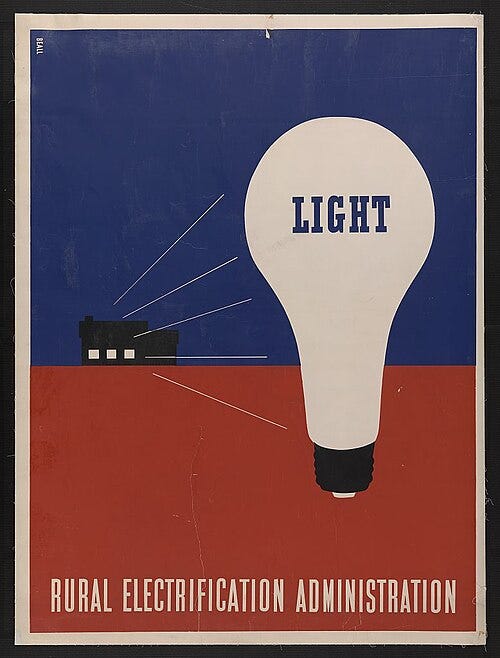
Farmers who could not get electricity strung the wire themselves and owned the cooperative that carried it. They financed it with patient, low-interest loans from the federal government — money lent at a fair return, and repaid. Inside fifteen years those rural electric cooperatives lit up most of rural America.24
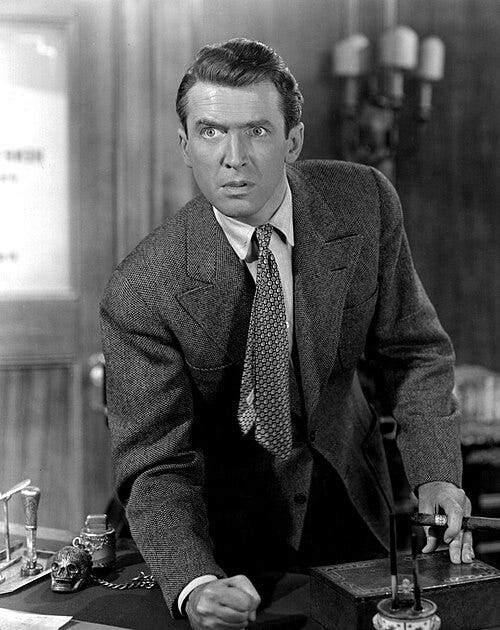
And in 1956 a lawyer named Louis Kelso showed the employees of a small California newspaper publisher how to buy the company from its retiring owners with money they did not have.
The design was a trust: it borrowed the purchase price, the company repaid the loan out of its own future profits, and as the debt came down the shares settled into the workers’ accounts — the same leverage a private equity financier uses to buy a company, but with the polarity reversed. Regeneration instead of extraction. The design later took a name: the Employee Stock Ownership Plan, or ESOP. Millions of Americans own a piece of the company they work for because of it.25
None of this was charity. Each investor was paid for the use of their capital by the people it benefited. They simply took a fair return instead of the maximum possible — and left a community of owners behind.
And every one of those structures has been deconstructed and consolidated and optimized into what sits in our retirement funds. The mutual insurers that demutualized, the savings-and-loans that converted to stock, the community hospitals and the nonprofit Blues that went for-profit.26
Enough
For most of American history, people could say what a fair return was out loud: 5%, perhaps 6%.27 In 1944 a gas company told the Supreme Court it deserved no less than 8%, and the government ruled that 8% was unreasonable — 6.5%, it said, was fair.28
For two centuries the law had a word for what you took above roughly 6%, and the word was usury, and if a court found you were engaging in usury then that contract was unenforceable.29 That was the culture the building-and-loan swam in. At 6%, the saver and the striver stand on the same side of the ledger.
Then, over fifty years, “a fair return” quietly morphed into “the most the market will bear.”
The usury caps disappeared, in two strokes of a pen in 1978 and 1980.30 Private equity set its floor at a 20% return and took a cut of everything above.31
Nothing that a community gets to keep grows that fast: a house, a farm, a firm, a town — none of them compounds its own worth at 20% a year indefinitely. Over the long run, 20% is a number you sustain only through some form of extraction. The claim denied. The rent quadrupled. The bank sold out from under the town. The risk shifted to the person least able to carry it.
A maximal return is not a fair return with better luck. It is a fair return plus someone else’s harm, even when the harm sits far enough downstream never to appear on the statement. The Great Liquidation, in one line, is what happens when a country decides a fair return is no longer enough.
Enough is the word the screen quietly retired, and the one the financialization machine is built to deny. Costco decides its profit is enough, and Wall Street files a complaint. Sister Nora decides the pay is more than enough, and has to buy into the bank to even get a meeting. UnitedHealth, for which no quarter is ever enough, sails clean through the fund we chose for our conscience.
The question at the end isn’t whether we can go back. We can’t, and we shouldn’t want to — the building-and-loan built the world our parents inherited, and our children will inherit an entirely different one, made of things our grandparents had no word for: a share of the intelligence, the network, the model, the robots that will do the work.
The question is whether we can do for their economy what our grandparents’ neighbors did for them — build the structures that take a fair return and leave the community owning the thing.
This is the work — and it begins with a plain truth: we cannot have our cake and eat it too. We have to choose how much is enough.
There is one person in this story who settled that question long ago. Sister Nora’s order asks its members to decide, once and for life, how little is enough — and to mean it. That vow is what carried her up to the forty-first floor: a woman for whom enough is a settled question, sitting across a polished table from an institution for which no number has ever been enough.
Six percent was once enough.
Further Reading
On the toolkit that offers exit and voice, but never a stake:
Albert O. Hirschman, Exit, Voice, and Loyalty (1970). The spine of the whole turn.
On the machine running on drift, not conspiracy:
Greta Krippner, Capitalizing on Crisis (2011): financialization as a sequence of locally defensible choices — the product manager in Boston or Malvern, at book length.
On the argument that a financialized retirement account is ownership without control:
Gerald F. Davis, Managed by the Markets (2009).
On owning everything and deciding nothing:
John Coates, The Problem of Twelve (2023); Lucian Bebchuk & Scott Hirst, “The Specter of the Giant Three,” Boston University Law Review (2019).
On the origins and limits of the screen:
Amy Domini, Socially Responsible Investing: Making a Difference and Making Money (2001); Morningstar, “The Story of the First ESG Index.”
On why mutuals and co-ops exist — and what converting them destroys:
Henry Hansmann, The Ownership of Enterprise (1996).
On the ownership economy in brick and wire:
Federal Reserve Bank of Richmond, “It’s a Wonderful Loan: A Short History of Building and Loan Associations” (2019); Louis Kelso & Mortimer Adler, The Capitalist Manifesto (1958).
On what a fair return once meant:
FPC v. Hope Natural Gas Co. (1944)
Bluefield Water Works v. PSC (1923)
Hugh Rockoff, “Prodigals and Projectors: An Economic History of Usury Laws in the United States from Colonial Times to 1900” (NBER, 2003); Thomas Piketty, Capital in the Twenty-First Century (2014).
On the doctrine that retired the word:
Milton Friedman, “The Social Responsibility of Business Is to Increase Its Profits,” The New York Times Magazine (1970)
Michael Jensen & William Meckling, “Theory of the Firm” (1976).
On institutions underwriting the thing they deplore
Delta Fund, “You Built This”.
Kevin Roose, “The Nuns Who Won’t Stop Nudging,” The New York Times, November 12, 2011 — the source for the Goldman meeting, the Sisters’ asks, and each of Sister Nora’s quotations here. The epigraph is hers, from the same reporting, spoken in the garden of Our Lady of Angels, the convent where she has worked for more than half a century.
Roughly $69.5 million to the five named executive officers for 2010, per Goldman’s proxy statement; the Sisters’ shareholder proposal asked the board to review whether senior pay was excessive.
Sister Nora Nash directs corporate social responsibility for the Sisters of St. Francis of Philadelphia; the campaigns named — Wells Fargo over the fake accounts (2017–18), ExxonMobil on climate (the 2017 resolution passed with 62 percent), Hershey on cocoa, Kroger on farmworkers — run through the Interfaith Center on Corporate Responsibility. Sources: the Times (2011); ICCR; The Philadelphia Inquirer (2018). What the order’s endowment holds, and in what size, is not public, and I have not guessed.
Pax World Fund, launched August 1971 by Luther Tyson and Jack Corbett, both United Methodist ministers — the first publicly available U.S. mutual fund screened on social criteria. The impulse they bottled runs back to John Wesley’s 1760 sermon “The Use of Money” — gain all you can, but never at your neighbor’s expense — which histories of the field, including the United Methodists’ own pension board, cite as the root of socially responsible investing.
The Interfaith Center on Corporate Responsibility, founded 1971; its first major campaign was the Episcopal Church’s shareholder proposal at General Motors over South Africa. Today it counts more than three hundred member institutions with over $4 trillion under management — which is its own kind of evidence for this essay’s argument: the conscience got very large, and the machine did not much move.
The Domini 400 Social Index, launched May 1990 by Amy Domini with Peter Kinder and Steve Lydenberg — the first index to build systematic social and environmental profiles of the companies in the S&P 500. It survives as the MSCI KLD 400. See Morningstar, “The Story of the First ESG Index.”
Global sustainable-fund assets stood at roughly $3.7 trillion in late 2025 (Morningstar, Global Sustainable Fund Flows) — still north of $3 trillion after the post-2022 backlash and outflows. Broader “ESG-labeled” tallies run far higher and far softer; the fund figure is the defensible floor, and the one this essay’s arithmetic uses.
Caroline Levine is the David and Kathleen Ryan Professor of the Humanities at Cornell and a co-organizer of TIAA-Divest. The figures — roughly $78 billion in fossil-fuel exposure, about $9.1 billion of it in coal bonds; some three hundred TIAA participants joining a complaint to the UN-backed Principles for Responsible Investment — are from Inside Higher Ed and the campaign’s filings. TIAA itself was created in 1918 with Carnegie money so that college teachers would not retire poor.
Levine, quoted in Inside Higher Ed, October 27, 2022.
The Vanguard FTSE Social Index Fund (VFTAX) returned roughly 12 to 13 percent a year over the five years through mid-2026, a few tenths behind the S&P 500 (Vanguard; Morningstar; StockAnalysis, July 2026) — the gap is close to the fee.
The glow is not a figure of speech. Neuroimaging studies of charitable giving found that voluntary giving activates the brain’s dopaminergic reward centers — the same circuitry that responds to receiving money (Harbaugh, Mayr & Burghart, “Neural Responses to Taxation and Voluntary Giving,” Science, 2007; Moll et al., PNAS, 2006). And the moral-licensing literature finds that a virtuous purchase measurably licenses the behavior that follows it: in the best-known study, people who merely bought green products went on to lie and take more in laboratory tasks than people who bought conventional ones (Mazar & Zhong, “Do Green Products Make Us Better People?”, Psychological Science, 2010). The glow is real, which is what made it sellable.
UnitedHealth sits at roughly two-thirds of one percent of the Vanguard FTSE Social Index Fund as of mid-2026; weights shift quarterly. The denial machine itself — the algorithms, the doctors overruled, the appeals designed to outlast the patient — is the subject of an earlier essay in this series, Prior Authorization.
Nvidia is carried as the fund’s single largest holding — about 9 percent of the fund as of July 2026. And the chips are only the visible end of it: the supply chain beneath them runs through the critical-minerals economy — tin, tantalum, tungsten, and gold across hundreds of smelters, for which Nvidia’s own SEC Form SD offers “reasonable, not absolute” assurance. The extraction logic beneath the chips is the subject of Quapaw.
Amazon, Meta, and Alphabet are all large holdings of the same fund. The keystone is the methodology: FTSE4Good-style screens work by sector exclusions, norms violations, and ESG-score thresholds — nothing in them excludes an insurer, a chipmaker, or a platform for how it makes its money. That is not a loophole. It is the design.
Elevance is the former Anthem — the rolled-up, for-profit conversion of fourteen states’ Blue Cross plans. MetLife and Prudential demutualized in 2000–01. Equity LifeStyle Properties and Sun Communities are the two largest listed owners of manufactured-housing communities — the public comparables to the private funds buying the ground under mobile homes. Uber joined the S&P 500 in December 2023.
Eric Tennant’s case — four denials of coverage for his stage-four cancer; the reversal that came only after reporters began calling, too late for him to use; his death in September 2025 — is told in Prior Authorization, with sources.
Bernard Moses’s story — the twenty thousand rides, the 4.99 rating, the lockout with no warning and no appeal — is told in Homestead, with sources.
Don Lund’s story — the lilacs, the decks, the ground rent that climbed from $87 a month to more than $500 after an investment firm bought his community — is told in Chattel, with sources. The fund that bought his park is private; ELS and Sun Communities are the listed versions of the same trade.
TIAA’s standard default, the CREF Stock Account, holds the broad market — roughly 8.8 percent fossil fuels, ExxonMobil included (Fossil Free Funds); recent filings show TIAA vehicles holding UnitedHealth as well. The point is structural, not a scandal: a diversified default holds the market, and the market is the machine — the most teacherly money in America holds what the whole market holds.
Jane Dietze, Brown University’s vice president and chief investment officer, in an April 2024 Q&A published by the university, on the arithmetic of divesting a large diversified portfolio. The honesty is the useful part: the structure, confessing in its own words.
She is a composite, and she is not a straw figure: building a screened fund really does cost more — the index license, the ratings data, a smaller asset base to spread it across — and the people who build them are, in my experience, sincere. That is the point. Nobody in this chain needs bad faith for the outcome to be what it is.
U.S. index funds with an ESG mandate typically charge on the order of ten to twenty basis points more than otherwise-comparable plain-index funds (Morningstar; Joachim Klement’s analysis, 2023). Ten to twenty basis points on three trillion dollars is three to six billion a year. The estimate is deliberately rough and deliberately conservative: the premium is cleanest for passive funds, while active ESG funds — most of the assets — charge more still, on a different basis.
The Oxford Provident Building Association, organized in Frankford, Pennsylvania, in 1831 — the first building-and-loan in America. Its first loan, about $375, went to Comly Rich, a lamplighter (the trade records also call him a comb-maker), for the small frame house on Orchard Street that stands today. See the Federal Reserve Bank of Richmond’s history, “It’s a Wonderful Loan” (2019).
In 1935, about one American farm in ten had electricity. The Rural Electrification Administration began lending in 1936 — long, low-interest loans made directly by the federal government to cooperatives the farmers organized and owned, self-liquidating and repaid at extraordinary rates — and by the early 1950s roughly nine in ten farms were lit. The co-ops still return their margins to members as capital credits, which is what a fair return looks like when the customers are the owners.
Kelso arranged that first buyout — Peninsula Newspapers, in Palo Alto — and laid out the theory two years later with the philosopher Mortimer Adler in The Capitalist Manifesto (1958). ERISA gave the structure its statutory home in 1974. The National Center for Employee Ownership counts roughly 6,600 ESOPs holding over $2 trillion for some 15 million participants — nearly 11 million of them still working. It is the largest surviving piece of the ownership economy, and almost nobody talks about it.
The conversion machinery — Garn–St. Germain easing the thrifts into stock form in 1982, the Blue Cross Blue Shield Association freeing its plans to go for-profit in 1994, the great mutual insurers cashing out around 2000–01 — is documented in this series’ capstone, Mayday.
Thomas Piketty’s long-run series puts the return on capital at roughly 4 to 5 percent across most of recorded history (Capital in the Twenty-First Century, 2014). Five percent was not a slogan; it was the observed price of patient money for centuries.
Federal Power Commission v. Hope Natural Gas Co., 320 U.S. 591 (1944). Hope argued it was entitled to a return of not less than 8 percent; the Commission found 8 unreasonable and 6.5 fair, and the Supreme Court let it stand — alongside the standard from Bluefield Water Works (1923): a utility deserves returns comparable to enterprises of corresponding risk, and no more.
At the founding, most states capped interest at 6 percent, and the penalty for usury commonly ran to forfeiture of the interest — in Massachusetts, of the principal too. Hugh Rockoff’s economic history of American usury law, “Prodigals and Projectors” (NBER Working Paper 9742), is the standard survey.
In two strokes. In Marquette National Bank v. First of Omaha (December 1978), the Supreme Court read the National Bank Act of 1864 to let a nationally chartered bank export its home state’s rate cap to borrowers in any other state — Minnesota’s limit could no longer touch a Nebraska bank’s card issued to a Minnesotan. The Depository Institutions Deregulation and Monetary Control Act (1980) extended the same privilege to state-chartered banks, and preempted state caps on first-lien mortgages outright. Then the states began selling the absence: South Dakota repealed its cap in 1980 and Citibank moved its credit-card operation to Sioux Falls; Delaware followed in 1981. After that, a cap anywhere was a cap nowhere. The word usury remains in the statutes. The number is gone.
Two numbers folded together, both real: buyout funds typically underwrite deals to gross return targets around 20 to 25 percent a year, and the standard fund contract pays the general partner 20 percent of the profits — the “carry” — above a preferred return. I am using “floor” for the underwriting target, which is the number that decides what happens to the company being bought; the contractual hurdle beneath the carry is lower. Either way the essay’s arithmetic holds: nothing being bought grows that fast on its own. And to be precise about the claim: the argument is not that any return above six percent is theft. It is that a system organized around the maximum return eventually requires extraction to deliver it — and that a society which loses the category of enough will, in time, organize itself around returns no community can survive.
Yas! Great piece. This like really resonates: ‘ A maximal return is not a fair return with better luck. It is a fair return plus someone else’s harm, even when the harm sits far enough downstream never to appear on the statement’
Personally, I have spent literally hundreds of hours on this wicked problem.
I divested from Fisher investments when they showed me their ‘ESG list’ - it excluded ‘abortion clinics’ but considered fossil fuels totally fine. Up until then the room full of gammon in client / shareholder meetings had scoffed when I raised issues like climate. So much greed.
Fidelity told me that ESG is no longer trendy, so I just have to search up funds myself by name and do the research myself.
Finally, I found some nice people called Tribe, who offer genuine Impact investing (not just excluding). But my portfolio is too small to benefit from ‘lower’ fees.
Meaning that I was paying an eye watering premium and basically floating at around 1-2% for not doing harm. So losing money, when inflation is so high.
‘Enough’ for me would be just not losing money and not doing harm. But system says no.