
In the summer of 2025, a BBC crew drove to Ganzhou in China to interview a farmer named Huang Xiaocong.
His farm was surrounded by four rare earth mining sites. He had spent years trying to document the damage: landslides he believed were triggered by improper mining, water he didn’t trust, and soil that looked wrong. He had accused a state-owned company of illegal land grabs. He had filed complaints. During the BBC interview, twelve company vehicles pulled up and blocked the crew’s car. A man identifying himself as a local manager held them for nearly three hours.
Huang Xiaocong told the reporter: “We ordinary people don’t have the answers. Farmers like us, we’re the vulnerable ones. To put it simply, we were born at a disadvantage. It’s pretty tragic.”
Economists have a name for people like Huang Xiaocong: the residual claimant. The party that receives what’s left after everyone else — the mining company, the state, the global supply chain — has taken their share. In Ganzhou, that share is contaminated land and a blocked BBC crew.
Rare earths are not especially rare. They are, however, expensive and complicated to process, which matters, because mining ore out of the ground is only step one. Step two is refining that ore into the usable materials that go into finished products. China has captured step two specifically.
China now controls 85% to 95% of global rare earth processing.1 For every tonne of rare earth produced, approximately 2,000 tonnes of toxic waste are generated.2
Much of the refined material feeds China’s own domestic manufacturing: the world’s largest electric vehicle market runs on it. But rare earths move globally, and that matters strategically. Neodymium and dysprosium, for example, become permanent magnets, the kind that maintain performance under extreme heat and stress. Every F-35 rolling off the Lockheed Martin production line contains approximately 900 pounds of rare earth materials, tracing back through the supply chains those mines feed.3
Rare earths are also in wind turbine generators and solar panel components. Lithium and cobalt, distinct from rare earths but similarly critical, go into the battery systems that make electric vehicles and grid storage possible. The entire decarbonization project, every solar panel and wind turbine and EV battery, is built on electrification, and electrification requires minerals. Drones, the vanguard of defense technology, are similarly dependent on electrification, and therefore the same minerals.
The farmer in Ganzhou is bearing the cost of that.
But the complicated and winding story of how America outsourced that cost, and in so doing made ourselves strategically dependent on China, actually begins in California.
The Desert Floor
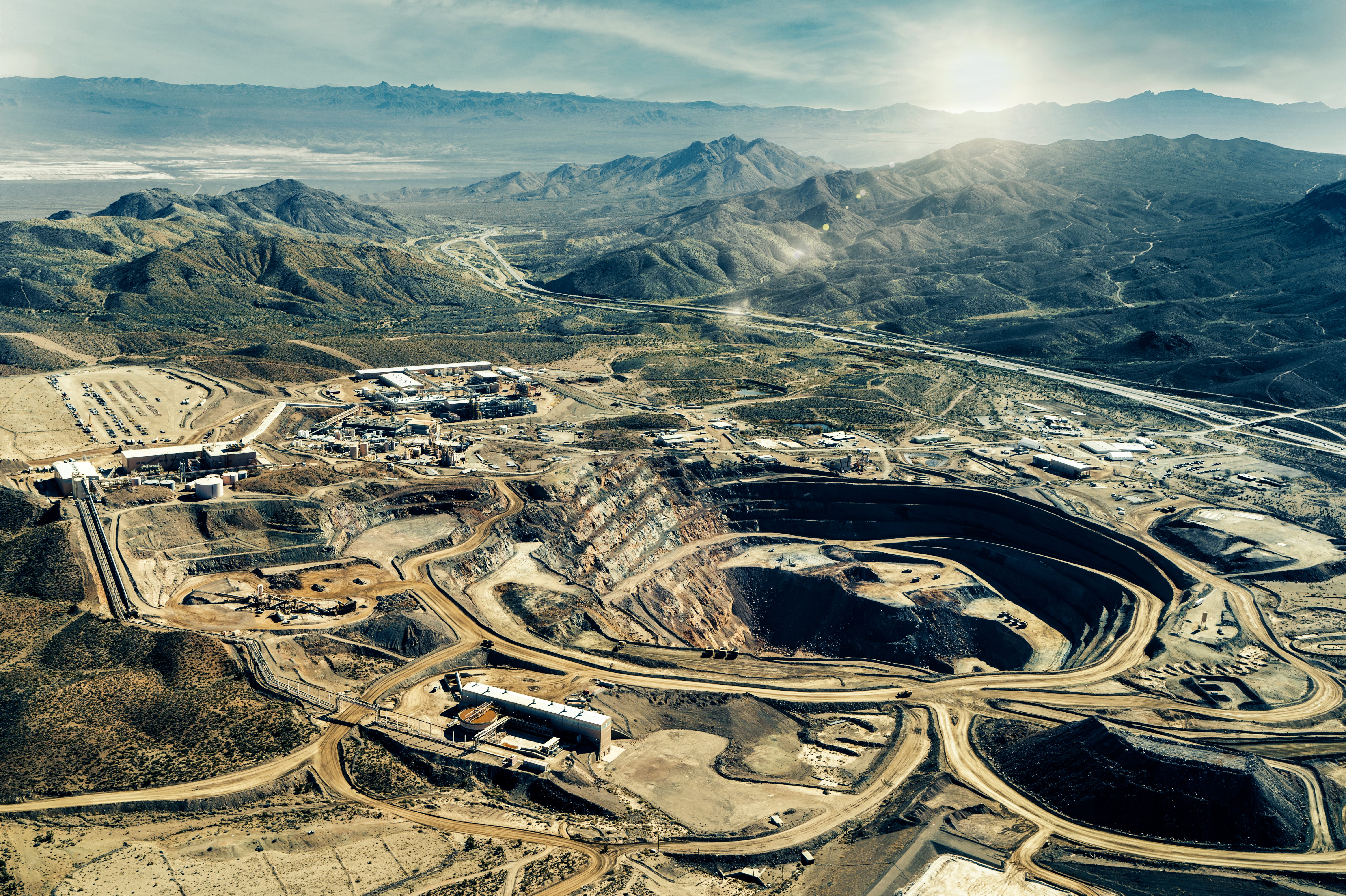
For decades, the Mountain Pass mine in San Bernardino County was the world’s dominant rare earth supplier. The United States was not dependent on China for rare earths because we had our own. Then, between 1984 and 1998, the pipeline carrying radioactive wastewater from Mountain Pass to an evaporation pond ruptured more than sixty times, releasing approximately 600,000 gallons of thorium- and radium-contaminated water onto the Mojave Desert floor.4
The mine closed. The company paid $1.4 million in fines against a billion-dollar operation with fourteen years of leaking radioactive wastewater into the desert.5 The fine failed to cover the immediate cleanup or resulting groundwater pollution. It priced in what the regulatory process could extract from a company whose lawyers were better funded than the enforcement agency.
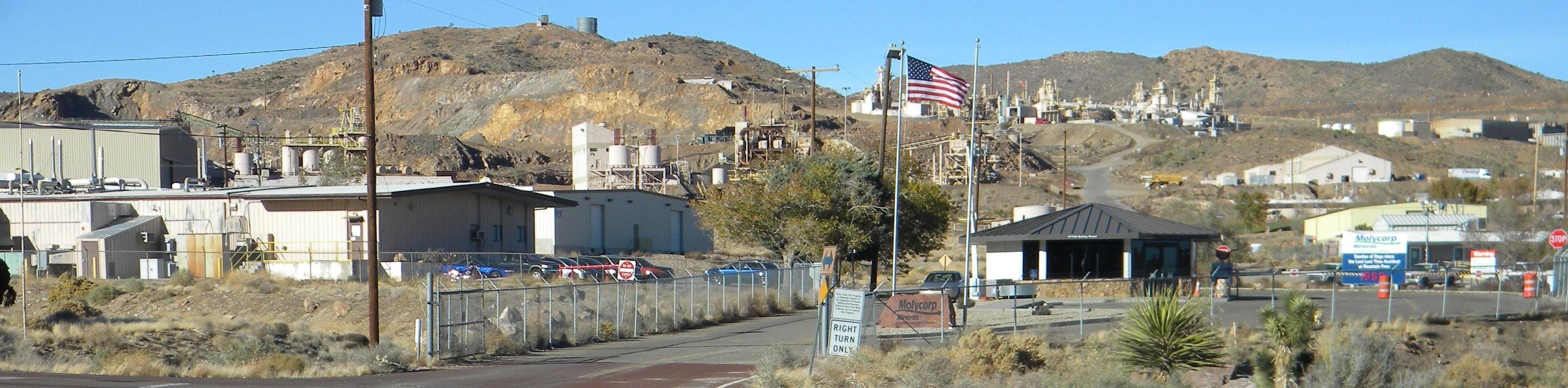
At the same moment Mountain Pass was shutting down, China was building processing capacity. With looser environmental standards, state subsidies, and lower labor costs, the economics were straightforward. The market made a rational choice: outsource the processing and buy the finished product. American manufacturers got cheaper materials. The Mojave got cleaner. Farmers in Ganzhou ended up like Huang Xiaocong.
And China became the source for the ingredients of our own weapons systems.6
The Trawler
Then, in September 2010, a Chinese fishing trawler collided with Japanese Coast Guard vessels near disputed islands in the East China Sea. Japan arrested the captain. China halted rare earth exports to Japan. China’s formal position was that there was no ban but Japanese buyers confirmed that shipments had stopped.
The halt lasted approximately two months. Global rare earth prices increased tenfold in the year that followed.7 A minor territorial dispute over a fishing boat was enough to threaten Japan’s entire high-tech manufacturing sector within days.
Japan responded with a national strategy: diversify sourcing, develop recycling, reduce dependence, and build reserves. Within a decade, Japan had meaningfully reduced its vulnerability.
The United States had sold off its Cold War strategic mineral stockpiles after 1989, on the theory that global supply chains would provide: the market was rational and therefore the supply would be there when needed. We didn’t need to inefficiently warehouse materials that free trade could deliver.
In January 2026, China restricted rare earth exports to Japan again. This time, the restriction was explicitly tied to the Japanese Prime Minister’s statement that a Chinese attack on Taiwan could be an existential threat to Japan. Gallium, germanium, graphite, rare earths, permanent magnets: all restricted.8
Low-Hanging Fruit
The year before that restriction, a team at the Colorado School of Mines published a paper in Science magazine.9 The lead author, Elizabeth Holley, had built a database of annual production from federally permitted, currently active metal mines, cross-referenced against ore chemistry to estimate what gets discarded as tailings.
The finding: from currently operating mines alone, the United States already generates enough critical minerals in waste materials to meet its needs for energy, defense, and technology. Because it is more profitable to mine for a single ore rather than separate multiple ores, we are literally throwing away our critical minerals in waste piles called tailings.
Recovering less than 10% of the cobalt currently discarded from active US nickel and copper mines would be enough to fuel the entire US battery market. Recovering less than 1% of the germanium in current tailings — germanium is used in the infrared sensors on missiles and defense satellites — would eliminate all US germanium imports.
Her analysis covered mines operating right now under federal permit. That is already a staggering number. But the United States also has more than 500,000 abandoned mines from historical operations, sites that were dug, depleted, and left.10 Estimated but unfunded cleanup cost for all those sites: $54 billion.11 The tailings in those sites contain cobalt, germanium, neodymium, lithium — the same minerals on the DOE and USGS critical minerals lists.
At present, none of those tailings are being put to use. And the vast majority aren’t being cleaned up. The minerals are there. The contamination is there. The communities adjacent to both are there. What’s missing is a legal framework that connects those three things.
Joint and Several
The reason the tailings sit untouched is a well-intentioned law: the Comprehensive Environmental Response, Compensation, and Liability Act (CERCLA).
CERCLA was passed in 1980 to make any party that touches a contaminated site jointly and severally liable for all cleanup costs, including contamination they didn’t cause. The earnest intent was to hold polluters responsible. In practice, it means no private capital enters a Superfund site to recover minerals, because entering the site to extract value triggers liability for everything. The minerals and the contamination are legally fused.
The Good Samaritan Remediation of Abandoned Hardrock Mines Act — a CERCLA liability shield for voluntary remediation — was introduced in ten Congresses over twenty-five years. It was finally signed into law on December 17, 2024.12
The Good Samaritan Act does tie extraction proceeds to remediation — proceeds defray the permit-holder’s costs, and any remainder flows into a federal fund the EPA controls to run future permits. But the community adjacent to the site has no claim on those proceeds. The fund is an EPA program budget, not a payment to the people who lived with the contamination.
CERCLA said that whoever touches contamination owns it all. The Good Samaritan Remediation Act said that whoever can extract the minerals takes them, free. Together they reinforce who the residual claimant is: the community that was harmed.
This has in fact been the architecture of American mining policy for over 150 years.
The General Mining Act of 1872 was signed by Ulysses S. Grant at the peak of the Gilded Age. It governs hardrock minerals on public land. Gold, silver, copper, lithium, rare earths. Under the General Mining Act, there are zero federal royalties. The mining industry has extracted over $300 billion in minerals from federal land under this structure.13
Oil and gas companies pay up to 18.75% royalties. Coal pays 12.5%. Lithium pays nothing.14 Some states impose their own small taxes on minerals extracted from state land — Nevada’s net proceeds tax, Montana’s severance tax, Idaho’s mine license tax.15 They are de minimis. And they flow to the state, not to communities. The people living on the land, downstream from the mine, often adjacent to it, have never had a claim on the proceeds.
The 1872 Mining Act is a statement about ownership. The foundational premise written into American mineral law from the beginning is that the land is there for whoever can extract it. The community harmed in the process owns nothing.
Tar Creek
We can see the threads of our story come together at a town in Oklahoma called Picher.
It sits in the Tri-State Mining District, which spans Oklahoma, Kansas, and Missouri. The District produced more than $1,000,000,000 in zinc and lead between 1908 and 1950. Eleven thousand workers, 250 mills at its peak.16 It was the largest industrial enterprise in the region for forty years.
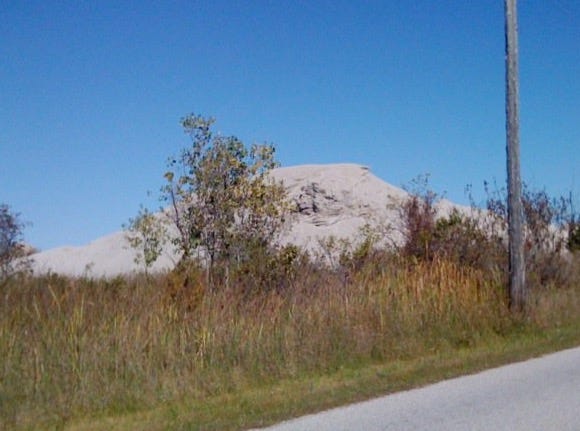
The waste from that mining piled up in chat piles — mountains of gray mill tailings that children sledded down because there was nothing else around. Tar Creek, the waterway running through the district, turned bright orange in 1979 when acidic mine water began flooding up through the abandoned shafts and pouring into the stream. The EPA put Tar Creek on the first Superfund National Priority List in 1983.17
The federal government eventually offered buyouts. The town emptied. A man named Gary Linderman ran the last business — Ole Miners Pharmacy, named after the workers who built the thing — until he died at sixty, in June 2015, still filling prescriptions for former residents who drove back to pick them up.
The Quapaw Nation originally held the land that became the Tri-State Mining District. The federal government, acting as trustee under the Bureau of Indian Affairs system, leased that land for mining at rates set by the government — not rates the Quapaw negotiated. The same trust structure that was supposed to protect tribal lands administered the transactions that stripped them of de facto ownership.18
The mining happened. The chat piles accumulated. The contamination spread through the groundwater and the creek and into the blood of Quapaw children. In 1994, one study found that 43% of Native American children in the area had elevated blood lead levels — 11 times the state average. The miscarriage rate was 24%, against a 10% national average.19
The Quapaw established their Environmental Office in 1997. In 2013, they negotiated with the EPA to self-remediate the Catholic 40 — a 40-acre parcel where St. Mary’s of the Quapaw school had stood before the land was leased for mining and returned contaminated. In October 2023, they became the first tribal nation to lead remedial operations at a Superfund site. They completed the Catholic 40 ahead of schedule: 107,000 tons of chat excavated, hauled, disposed of.20
Meanwhile, there is a company in the town of Quapaw, Oklahoma, that processes germanium tetrachloride for fiber optics. They are one of the few domestic processors of a mineral that China banned from export to the United States in December 2024.21 Germanium is associated with the zinc and lead-zinc-copper sulfide ores that the Tri-State district spent forty years extracting. Globally, as little as 3% of germanium in zinc concentrates is recovered; 97% goes to tailings. The tailings from the lead-zinc mining are the kind where germanium concentrates.
After the Chinese ban, germanium prices went from $1,550 per kilogram to $2,950 per kilogram in 2024.22 In July 2025, the Department of the Interior issued Secretary’s Order 3436, directing federal bureaus to streamline critical mineral recovery from mine waste at abandoned sites across the country — including the class of abandoned hardrock mine waste that Tar Creek represents.23
The minerals that could close our strategic dependency on China are sitting in the ground at the most contaminated place in the region. The community that has spent thirty years cleaning up the contamination has no ownership claim on what’s underneath it. Reprocessing tailings to extract minerals is not the same as cleaning up contamination — the proceeds of mineral recovery do not automatically fund remediation, and the two operations can leave the site in a worse condition than before.
The Quapaw are the residual claimants — the ones left holding the cost. Huang Xiaocong in Ganzhou is for the same reason.
But Mountain Pass already showed what that looks like. The mine that closed in 2002 was purchased out of bankruptcy in 2017 and reopened by MP Materials. One of the founding consortium members was Shenghe Resources — a Chinese company partly owned by China’s Ministry of Natural Resources — which held a minority equity stake in the operation.
The United States reopened its primary domestic rare earth mine with Chinese state-linked financing. The contamination was never remediated. The extraction resumed. The community harmed had no claim. And the architecture stayed the same.24
Suggested Sources
On rare earth supply chains and strategic dependence:
Congressional Research Service, “Rare Earth Elements: The Global Supply Chain,” Marc Humphries (RL33743)
Guillaume Pitron, The Rare Metals War (2020; English translation 2022)
GAO-24-105546, “Defense Critical Minerals: Actions Needed to Address National Security Risks” (2024)
On the 1872 Mining Act and federal mineral law:
John D. Leshy, The Mining Law: A Study in Perpetual Motion (Resources for the Future, 1987)
General Mining Act of 1872, 30 U.S.C. secs. 22-54
Pew Environment Group, “Hardrock Mining on Federal Lands” (2011)
On Tar Creek and the Tri-State Mining District:
EPA Tar Creek Superfund site records (epa.gov/superfund)
ATSDR health consultation reports, Tar Creek area, 1994-2004
On CERCLA and the Good Samaritan problem:
GAO-20-238, “Abandoned Hardrock Mines: Information on Number of Mines, Expenditures, and Factors That Limit Efforts to Address Hazards” (2020)
Good Samaritan Remediation of Abandoned Hardrock Mines Act: GovTrack, S. 1787 (106th Congress, 1999) through S. 2781 (118th Congress, 2024); reintroduced as the Legacy Mine Cleanup Act, S. 2741 (119th Congress, 2025)
On critical minerals and the tailings opportunity:
Elizabeth Holley et al., Science (2025)
USGS Mineral Commodity Summaries (annual) -- germanium, cobalt, rare earths, lithium
U.S. Cold War strategic stockpile liquidation: Defense Stockpile Center historical records; CRS reports on the National Defense Stockpile
U.S. Geological Survey, Mineral Commodity Summaries 2025: Rare Earths. China’s share of global rare earth refining capacity is approximately 85 to 90 percent; estimates from the Congressional Research Service and the International Energy Agency range up to 95 percent when including affiliates and joint ventures in third countries. Congressional Research Service, “Rare Earth Elements: The Global Supply Chain,” Marc Humphries (RL33743, updated 2024).
The waste ratio varies by ore grade and processing method. For in-situ leaching of ion-adsorption clays (the dominant method in Jiangxi province), some estimates are higher. The 2,000-tonne figure is widely cited in academic and policy literature. See: UNEP, “Environmental Risks and Challenges of Anthropogenic Metals Flows and Cycles” (2013).
U.S. Government Accountability Office, “Rare Earth Materials in the Defense Supply Chain,” GAO-10-617R (April 2010). Per-aircraft figures vary by configuration; see also GAO-16-161, “Rare Earth Materials: Developing a Comprehensive Approach Could Help DOD Better Manage National Security Risks in the Supply Chain” (2016). Congressional Research Service, “Rare Earth Elements in National Defense,” Valerie Bailey Grasso (RL41744).
California Department of Toxic Substances Control (DTSC) and California Regional Water Quality Control Board enforcement records. The pipeline rupture count (more than sixty times) and volume (approximately 600,000 gallons) are documented in DTSC enforcement actions against Molycorp and its predecessors. Coverage: Marla Cone, Los Angeles Times, 2000-2002.
California DTSC/Regional Water Quality Control Board penalty documentation. The $1.4 million figure appears in contemporaneous press accounts of the consent decree. Molycorp filed for Chapter 11 bankruptcy in 2015.
Japan arrested the captain of the Minjinyu 5179 on September 7, 2010, and released him on September 24, 2010, following Chinese diplomatic pressure and halted rare earth shipments. Reuters and New York Times contemporaneous coverage, September-October 2010. For price data: USGS Mineral Commodity Summaries, 2010-2012; some rare earth oxide prices increased 500 to 1,000 percent between 2010 and 2011.
Government Accountability Office, “Defense Critical Minerals: Actions Needed to Address National Security Risks,” GAO-24-105546 (2024); title and number as cited in secondary sources — primary document not independently verified.
China’s Ministry of Commerce announced export controls on gallium and germanium beginning July 2023, with subsequent rounds covering graphite (October 2023) and rare earth permanent magnets (April 2025). The January 2026 Japan-specific restriction was reported by Reuters and Nikkei Asia. Confirm exact date and official characterization before publication.
Elizabeth Holley et al., “By-product recovery from US metal mines could reduce import reliance for critical minerals,” Science (2025). DOI: 10.1126/science.adw8997. The paper analyzed annual production data from federally permitted, currently active metal mines, cross-referenced with ore geochemistry to estimate byproduct minerals discarded as tailings. The cobalt (<10% recovery closes battery market gap) and germanium (<1% recovery eliminates imports) figures are from the paper’s analysis. Holley quote from Colorado School of Mines press release, 2025.
U.S. Environmental Protection Agency, Abandoned Mine Land program documentation. Government Accountability Office, “Abandoned Hardrock Mines: Information on Number of Mines, Expenditures, and Factors That Limit Efforts to Address Hazards,” GAO-20-238 (2020).
GAO-20-238 (2020). The $54 billion estimate covers the most contaminated sites; EPA has assessed only a fraction of the total 500,000+ abandoned mine sites.
Good Samaritan Remediation of Abandoned Hardrock Mines Act, Pub. L. 118-155, 30 U.S.C. sec. 1241 et seq. (2024). Under section 1245, a permittee may recover remediation costs from mineral proceeds; any remainder is deposited into a federal fund administered by EPA for future permitting and oversight. The fund is an EPA program account; no distribution mechanism directs proceeds to adjacent communities. The Act is structured as a pilot program capped at fifteen permits; past or current owners or operators of the site are ineligible.
Pew Environment Group, “Hardrock Mining on Federal Lands: An Analysis” (2011). The $300 billion figure draws on USGS production data; estimates range from $230 billion to over $300 billion depending on methodology and years. See also: NRDC, “Fool’s Gold: Reforming the 1872 Mining Law.”
Federal royalty rates: oil and gas -- Mineral Leasing Act of 1920 (30 U.S.C. sec. 226), current rate 16.67 to 18.75 percent depending on lease terms; coal -- 30 U.S.C. sec. 207, 12.5 percent (surface) and 8 percent (underground); hardrock minerals -- General Mining Act of 1872, no royalty provision. Administered by the Office of Natural Resources Revenue (ONRR), U.S. Department of the Interior.
Nevada: Net Proceeds of Mines Tax, Nev. Rev. Stat. secs. 362.100-362.240. Montana: Metal Mines License Tax, Mont. Code Ann. secs. 15-37-101 et seq. Idaho: Mine License Tax, Idaho Code secs. 47-1201 et seq. These taxes apply to minerals extracted from state or private land within those states; they do not apply to federal land under the 1872 Act. Revenue flows to state general funds; no statutory mechanism directs proceeds to affected communities.
U.S. EPA, Tri-State Mining District / Tar Creek Superfund Site background documentation. Oklahoma Department of Environmental Quality site history records.
EPA Superfund National Priorities List, first list published December 1983. Tar Creek was among the original NPL designations. The orange discoloration of Tar Creek beginning in 1979 is documented in EPA and ODEQ site records.
The BIA trust mismanagement at Tar Creek was not only structural — it was also accounting. The federal government collected royalties on behalf of Quapaw allottees for decades and failed to account for them properly. H.R. 1451, the Quapaw Tribal Settlement Act, was introduced in February 2025 and, as of publication, is pending in Congress; it would authorize $137.5 million to settle claims arising from that mismanagement. Critically, the settlement addresses what the Quapaw were owed under the existing structure — royalties that should have been paid but weren’t — not a correction of the structure itself. The Quapaw received compensation for the trust’s failure to administer their interests correctly; they did not receive ownership of the land, the chat piles, or any future mineral proceeds. The structure that produced the mismanagement — federal trusteeship over restricted Indian land, with the government as negotiating party — remained unchanged.
Agency for Toxic Substances and Disease Registry (ATSDR), health studies, Tar Creek area, 1994-1996. The 43% elevated blood lead figure (11x state average) and 24% miscarriage rate are cited in EPA and congressional documents on the site and in multiple ATSDR health consultation reports (issued 1994-2004). Verify specific ATSDR report number before publication.
U.S. Environmental Protection Agency, “Quapaw Nation Leads Cleanup at Tar Creek Superfund Site,” EPA press release, April 19, 2024.
China Ministry of Commerce (MOFCOM) announcement, December 2024. Reported by Reuters, Bloomberg, Financial Times.
U.S. Geological Survey, Mineral Commodity Summaries 2025: Germanium. Price data: germanium metal, price per kilogram, 2023-2024. The 3% recovery rate reflects the low end for zinc concentrates; global average recovery is below 10 percent.
U.S. Department of the Interior, Secretary’s Order 3436, “Unlocking Critical and Strategic Minerals from Mine Waste, Cutting Red Tape, and Restoring American Dominance in Strategic Mineral Production,” July 23, 2025. The order directs Interior bureaus to streamline critical mineral recovery from mine waste across federal, state, tribal, and private lands; it does not designate specific sites. Tar Creek falls within the scope of abandoned hardrock mine waste the order addresses.
Mountain Pass mine purchased at auction June 2017 for $20.5 million by MP Mine Operations LLC, a consortium including JHL Capital Group, QVT Financial LP, and Shenghe Resources. Shenghe Resources is a Shanghai-listed company with significant state-linked ownership; secondary reporting indicates the Institute of Multipurpose Utilization of Mineral Resources, under China’s Ministry of Natural Resources, held approximately 11–14% during the 2017–2020 period, with ownership structure evolving over time; this figure is not independently verifiable from the MP Materials SEC filings, which confirm only that Shenghe held a minority, non-voting equity interest. Source: MP Materials Corp. SEC filings (S-1, 2020); contemporaneous reporting. As of December 2021, Shenghe held approximately 7.7% of the public company (MP Materials Corp., NYSE: MP). In July 2025, the U.S. Department of Defense announced a deal to become the largest shareholder of MP Materials — after this essay’s primary period of analysis.