
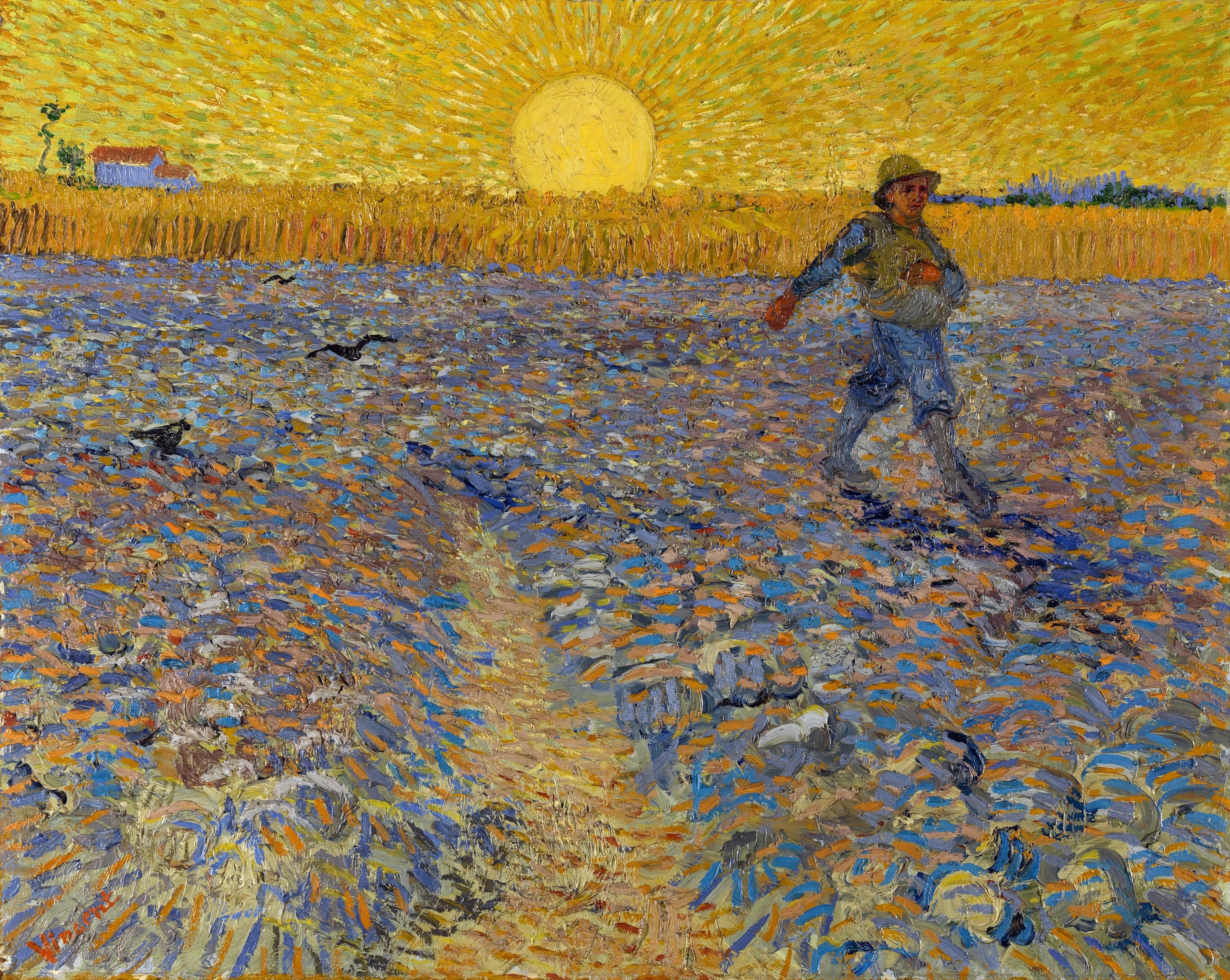
Nan Ransohoff’s The Third Wave of American Philanthropy has made the rounds among philanthropists, investors, and politicians. For good reason.
In Ransohoff’s framing, the first wave of philanthropy built libraries and universities. The second built foundations and endowments — vehicles that believed they could eliminate malaria, reform education, and restructure failing cities.
The third wave, she argues, has a chance to be smarter still: AI wealth will be deeply concentrated, it will be significant — her estimate runs north of $370 billion over the next decade — and the founders who are generating it think about disruption. Many of them lose sleep over it.
Ransohoff is right about the capital and the instincts. What’s missing from her analysis is a single word: ownership.
The people who built Silicon Valley believe, with genuine conviction, that they are the winners of the world’s greatest meritocracy. Many of them may be right. Talent matters. Hard work matters. Risk tolerance matters.
But they also know, with the precision of a cap table, that meritocracy alone does not explain the scale of their wealth. Ownership does. They held equity in companies whose value compounded. They paid their own engineers with equity for the same reason.
Meanwhile, for the rest of America, ownership split three ways over the past forty years.
The top one percent accumulated assets — roughly 30% of the nation’s wealth by 2024, up from 22% in 1978.1
The broad middle traded active ownership for paper: a credential and a retirement account. The degree became a durable claim on the knowledge economy, priced in wages over a lifetime. The 401(k) offered a slice of the market stripped of a vote or a say.
And the bottom half were stripped of the assets they had and never received the credentials either: from 9% of national wealth in 1978 to 2.5% today.
And AI is beginning to do to the diploma what Uber did to the taxi medallion: expose how much of its value came from controlled scarcity. As machine cognition becomes abundant, much of the wage premium attached to routine knowledge work begins to migrate toward whoever owns the compute, the data, and the rails.23
The credential will no be longer the stake. And for the bottom half of America, there was never anything else.
Over the past half-century, ownership of the institutions that shape daily life consolidated into distant hands — corporate, governmental, financial — that treat people as assets to extract from, not members who govern. The land beneath your home. The mill that processes your crops. The platform that carries your voice. The algorithm that determines your health insurance premium and your credit score.
This is where many of the third wave founders have their own direct experience of a world that’s been extracted away. Once a year, they go to Burning Man.
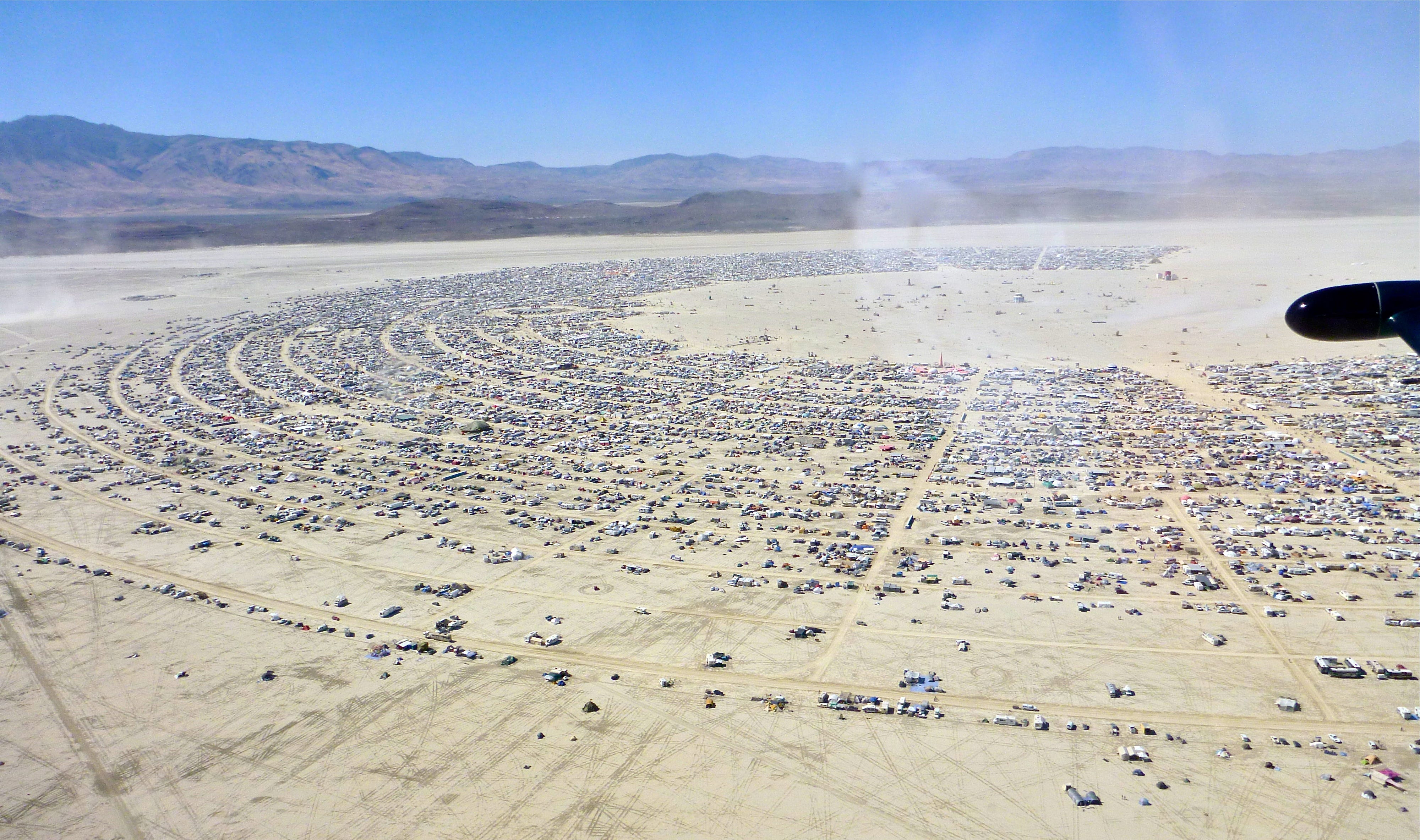
On the Playa, they feel a temporary version of what the rest of American life has lost. Participation that is built, rather than consumed. Belonging that comes from contribution. A city whose meaning depends on people building it themselves. The gift economy isn’t a moral achievement. It’s a structural one, ironically available today mainly to those with the wealth to afford it.4
Many of those Burners go home and try to replicate the feeling. They start foundations. They fund programs. The inspiration persists but the feeling stays on the Playa, because the structure of our economy does not allow it to exist anywhere else.
But the Silicon Valley elite are not the only ones reaching for this cultural corrective.
Anne and Landon Plagge are fourth-generation farmers. Landon’s family has worked the same land in Iowa since the nineteenth century. In the fall of 2019, they watched a combine cut through a strong oat harvest — planted to regenerate their soil — and then watched it sit in storage, unsold, for months. The nearest food-grade mill was hundreds of miles away. Shipping erased any margin they would make on the nutrient rich oats.
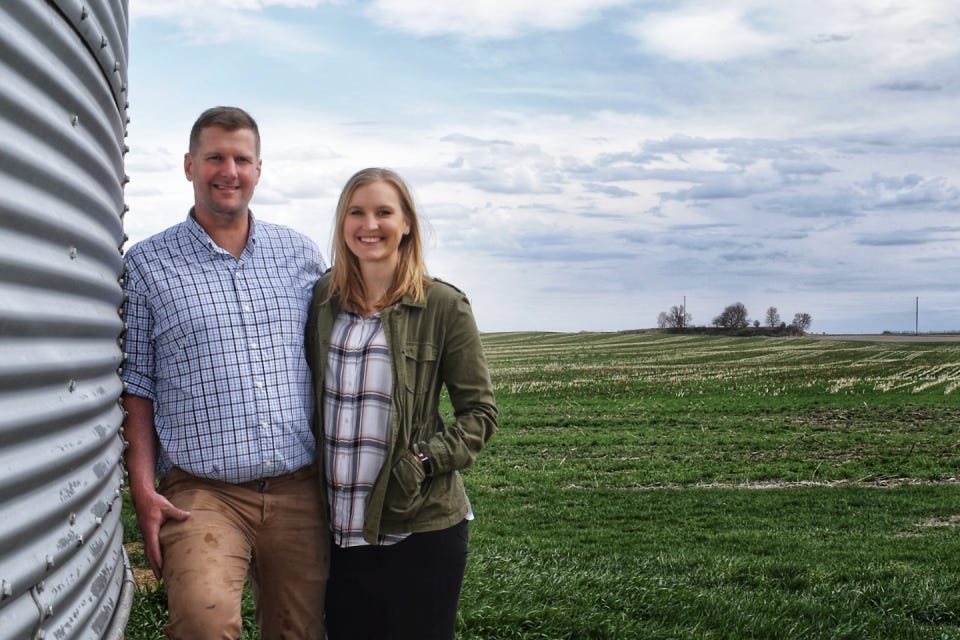
“We’re not waiting for the system to fix itself,” Landon said. “We’re building what needs to exist if our kids want to stay.”
Green Acres Milling — a farmer-owned oat mill backed by more than 110 farming families, each committing capital and long-term supply — exists because the Plagges and their neighbors decided to own their own processing infrastructure. They arrived at the ownership insight the hard way: through math and survival, rather than ideology.
The exhaustion with institutions, the contempt for elites, the loneliness epidemic, the sense that the system is being run for someone else — these are not primarily expressions of bad values or inflamed grievance. They are the downstream expression of a structural condition: alienation.
Communities stripped of ownership have nothing to defend together. The decisions that shape their lives are made by people who will never have to live with the consequences. The institutions that were supposed to serve them were converted into instruments of extraction.
The counterweight to this alienation is ownership. It has always been ownership.
American Dreaming has a name for that half-century of conversion: the Great Liquidation. Mayday traced it to its source and ended on a promise — that the next work is to answer the call. The answer starts here.
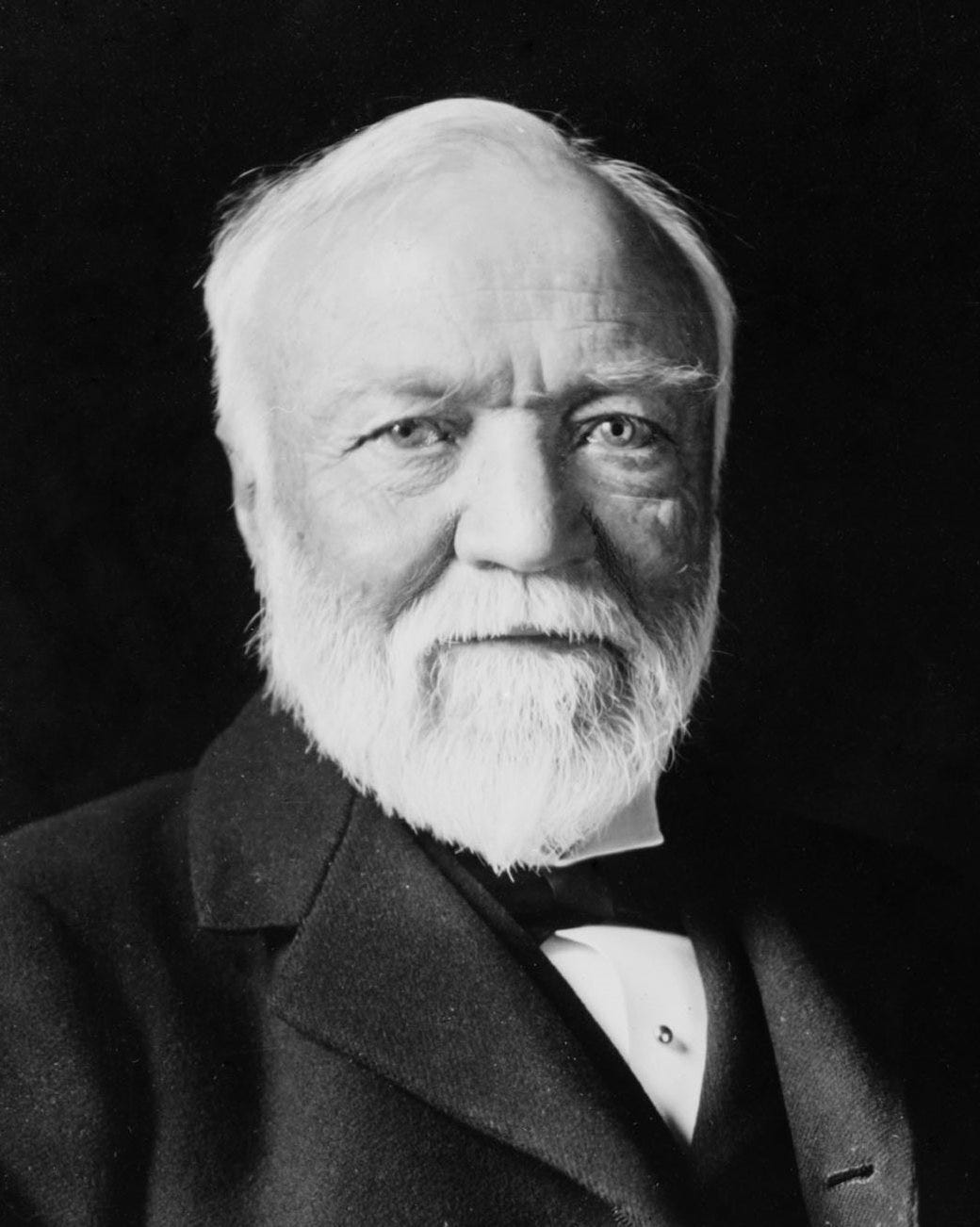
The first wave of American philanthropy — Carnegie, Rockefeller, Mellon — built institutions: libraries, universities, concert halls. Their theory was access.
The second wave — Gates, Buffett, the Ford Foundation — aimed at systems: eliminate malaria, reform the schools, change the conditions that generate problems rather than treating their symptoms. They achieved real results. But the limit on their work was structural: they were still giving gifts.

Philanthropy is a gift. A gift may do enormous good, but it does not, by itself, leave the receiver owning anything. The giver remains the giver. The receiver remains the receiver. We cannot gift our way out of a structural problem, because the structure itself determines who controls the next gift.
Income flows through the system. Ownership changes who controls it.
And before the obvious answer forms — then solve it with venture instead — remember what venture was built to be. Venture capital knows how to do what philanthropy usually does not: experiment, negotiate the term sheet, set the milestone, take governance seriously, back the founder and hold them to account for delivering.
But venture was never designed to finance an economy. It was designed as a boutique — a specialty instrument for backing the most improbable ideas available, which is why its math requires the rare winner to pay for a graveyard of losers, and why everything it touches must be sold: to fund the next moonshot. The exit is not a flaw in the culture. The exit is the culture.
A mill owned by 110 farming families will never return a hundred times anyone’s money. It is not supposed to. It is supposed to still be there when the grandchildren deliver the harvest — a kind of success venture math cannot recognize.
Private equity can see it, and that is the problem: it buys cash flows that reliably endure — the clinics, the trailer parks, the local papers — and turns them into financial assets stripped of loyalty to people and place.
Between venture and private equity, the dependable heart of the economy has no financier left: too modest for venture to fund, but too steady for private equity to spare.
The infrastructure the third wave needs is the deliberate offspring of all of these — philanthropy’s patience and its peace with modest but fair returns, married to venture’s discipline and its faith in builders, but with private equity’s fluency in assets that deliver a durable surplus. But aimed at an exit none of these cultures has a word for: to the community itself, on the day the institution no longer needs its funders or founders at all.
The people who faced this same challenge a hundred years ago did not wait for someone else to forge this culture. Workers built the unions, the mutual insurers, the building and loan associations, the fraternal aid societies — what Robert Putnam would later call social capital.5 Black Americans, locked out of nearly all of it, built their own: HBCUs, the Black church as an economic institution, the mutual aid societies and cooperative businesses W.E.B. Du Bois catalogued in 1907.6
Carnegie’s libraries were philanthropy. The New Deal and the Civil Rights Act required something philanthropy could not substitute for: organized people with institutions of their own, institutions that gave them their own power.
That bottom up organizing took fifty years — and for Black Americans, thirty more.
AI will not give us that time. McKinsey estimates that by 2030, up to 30% of current U.S. work hours could be automated7. Goldman Sachs puts 300 million jobs globally at exposure.8 And the early returns are no longer projections: by the middle of 2025, employment for early-career workers in the most AI-exposed occupations had already fallen roughly 13% relative to their peers.9 This is the disruption, moving faster than any bottom-up organizing can match.
Philanthropic capital deployed through ownership structures — intentionally, at speed — can compress what required generations a century ago into the decade that AI might afford us.
The capital is right. The culture is wrong. Philanthropy’s money can do this work but philanthropy’s ways of doing things cannot. So the third wave’s first investment is the ecosystem itself — the third lane, and it needs a name. Call it ownership capital: patient as a foundation, disciplined as a fund.
The name is new only because the thing itself became rare. Fifty years ago Americans simply called it capital — the pooled savings that built the neighbors’ houses, the mutual that carried the town’s risk, at a fair return, with the savers and the served electing the same officers. Enough traced what that capital once meant, and what a fair return once was. The third lane is a restoration, not an invention. The oldest lane in American finance, reopened with modern tools.
The $370 billion Ransohoff anticipates is new money — wealth that has not yet become liquid, from fortunes still being made. That is the capital this essay is calling into a new role. But the ecosystem it will require does not have to wait.
Wealthy Americans have already parked more than $326 billion in donor-advised funds: money already given, already deducted, already committed to public purpose, and still waiting for instructions.10 These funds are sitting there, often idle, even before the third wave capital arrives. DAFs are the capital that can build the harbor before the tsunami arrives. DAF money can seed the first ownership funds, finance the legal architecture, absorb the early risk, and establish the track record that lets the new AI fortunes enter at scale.
Sent out only as grants, this capital disappears in a year, doing good on the way down. Deployed as first-believer capital for ownership structures — recoverable, recyclable, designed to vest assets in communities — it can build the pipes through which the next generation of wealth will flow.
The new money can finance an ownership economy. The money already sitting there can make that thesis investable in time.
Of course, philanthropy can’t do it alone, even with the third wave capital: policy and capital markets must eventually follow. But the right philanthropic seed investments can set the patterns and create a natural constituency for the 21st century policy frameworks of an ownership economy. That is the opportunity this moment offers that Carnegie’s moment did not.
The ideas are already arriving from every direction. Gavin Newsom recently announced a study on Universal Basic Capital: as AI generates profits, give displaced workers equity stakes in those profits. Garry Tan, the CEO of Y Combinator, argues that open source infrastructure breaks the concentration of power in big tech and gives everyone a chance to own a stake in the AI transformation. Across the crypto world, advocates for Universal Basic Equity are experimenting with distributed ownership of digital assets.11
Each identifies part of the answer — equity, commons, distributed stakes. None supplies the whole: a society stripped of broad-based ownership cannot sustain self-governance, because self-governance requires belonging, and belonging requires a stake. More than a check. More a bet placed for you. A stake — in the AI tools that can unlock unimaginable human potential but also in the mill that processes your crops, the land beneath your home, the laundromat where your neighbors gather, and the platform that carries your voice.
The founders and builders of 2026 are the first generation in American economic history with the capital scale, conceptual frameworks, and cultural instincts to rebuild an ownership economy at speed. They know that a stake in an institution changes your relationship to it — it makes you its member, its defender, its governor.
What the third wave can do that the first two could not is deploy capital through ownership structures rather than gift structures — seeding the co-ops, land trusts, creator guilds, and community-owned infrastructure that demonstrate, in concrete and auditable terms, that active equity produces better outcomes for communities and for the organizations operating in those communities.
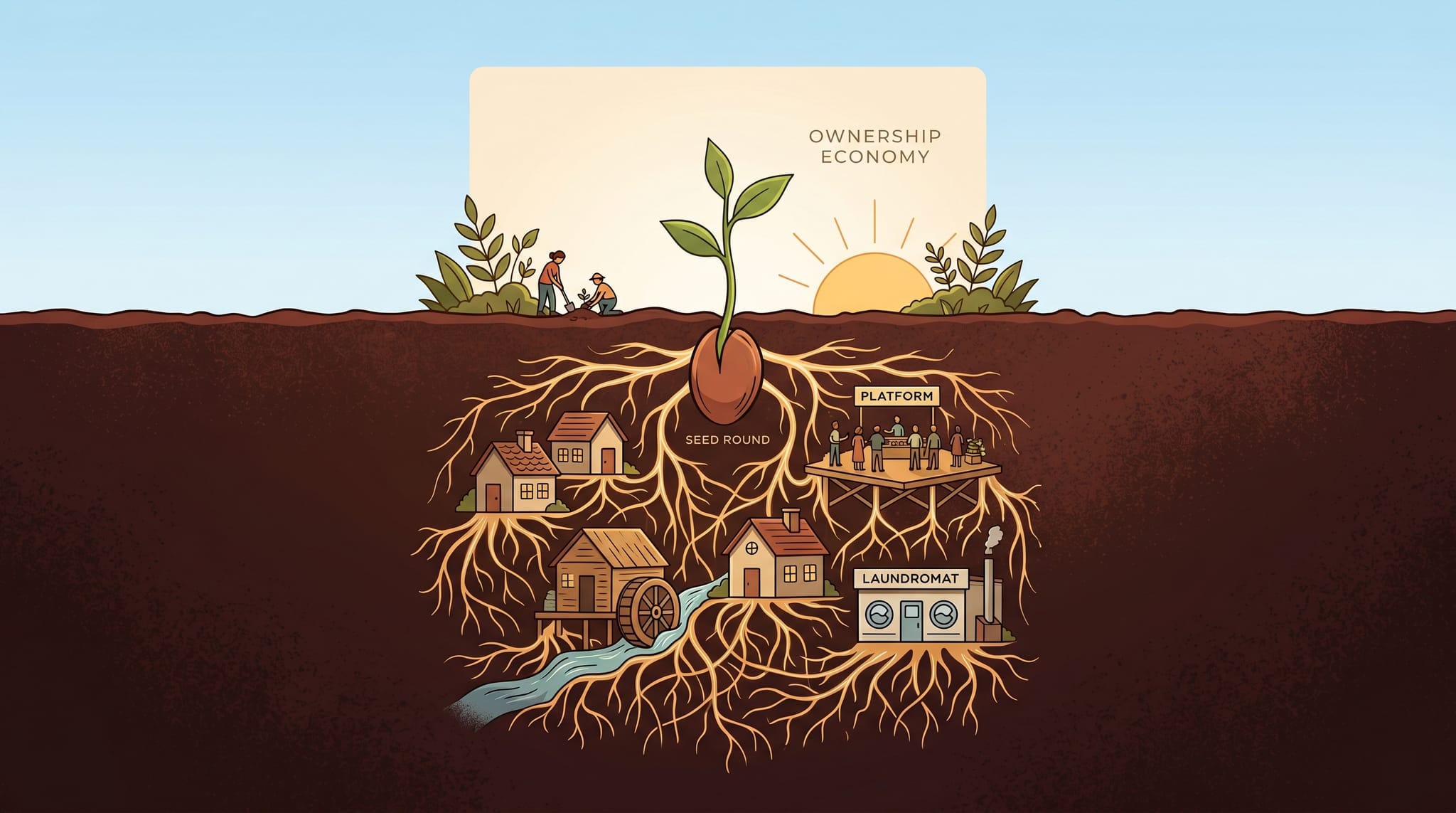
So this call runs in both directions.
To the funders: stop treating grants as the only form public-purpose capital can take. Fund stakes that vest in communities, not only programs that expire when the grant does.
To the builders: don’t wait until the exit to ask who should own what you built. Design the workers, customers, suppliers, and neighbors into the ownership structure from the day it opens.
Every seed round has two sides of the table. This one does too.
The AI founders $370 billion cannot be the whole solution. But it can be the seed round. The question — for the people holding the capital, and for the people who will build what it funds — is what kind of America they choose to seed.
Federal Reserve Distributional Financial Accounts (Q4 2024). For pre-1989 figures, see Saez, E. & Zucman, G., “Wealth Inequality in the United States since 1913,” Quarterly Journal of Economics, 2016; and the World Inequality Database.
Acemoglu, D. & Restrepo, P., “Tasks, Automation, and the Rise in U.S. Wage Inequality,” Econometrica, vol. 90, no. 5, pp. 1973–2016, 2022.
Brynjolfsson, E., Li, D. & Raymond, L., “Generative AI at Work,” NBER Working Paper No. 31161, 2023.
The price of the gift economy, 2025: admission to Black Rock City ran $550 to $3,000 plus fees under Burning Man’s tiered, pay-what-you-will ticketing, with a $150 vehicle pass to drive in; a week of desert self-reliance — transport, gear, water, food, camp dues — is commonly estimated to push a frugal participant’s all-in cost past $2,000, and the “turnkey” camps run to five figures. The organization’s own accounting put the bare cost of producing the city at $749 per participant in 2023. The city with no commerce is, per capita and per week, one of the more expensive addresses in America. (Burning Man Project 2025 ticketing; Billboard; Burning Man Project financial reporting.)
Putnam, R., Bowling Alone: The Collapse and Revival of American Community, Simon & Schuster, 2000.
Du Bois, W.E.B., “Economic Co-operation Among Negro Americans,” Atlanta University Press, 1907.
McKinsey Global Institute, “Generative AI and the Future of Work in America,” July 2023.
Goldman Sachs Research, Briggs, J. & Kodnani, D., “The Potentially Large Effects of Artificial Intelligence on Economic Growth,” March 2023.
Brynjolfsson, E., Chandar, B. & Chen, R., “Canaries in the Coal Mine? Six Facts about the Recent Employment Effects of Artificial Intelligence,” Stanford Digital Economy Lab, August 2025 (revised November 2025): in ADP payroll data, employment for workers aged 22–25 in the most AI-exposed occupations declined 13% from late 2022 through mid-2025, relative to older workers in the same occupations and young workers in less-exposed ones.
Donor-advised fund assets reached $326.45 billion in fiscal 2024 — up 27.5% in a year — with $89.6 billion contributed and $64.9 billion granted (Annual DAF Report 2025, DAF Research Collaborative, successor to the National Philanthropic Trust report series).
Raoul Pal (@RaoulGMI), X, April 27, 2026: “Forget UBI. The answer is Universal Basic Equity… and it’s humanity’s pension plan for the post-AGI world.”
Yes, you’ve convinced me that shared/community ownership is necessary to make the economy work for people, in the short term.
But I still don’t think it fully addresses planetary health and future generations. A community could have shared ownership of a factory that still pollutes a river, or a fishing cooperative that collectively decides to overfish a stock because it’s more profitable this year — ownership solves who benefits, but not necessarily what happens to the planet. You can democratize the extraction without stopping it.
So alongside reinstating community ownership, I’d want to see community stewardship reinstated too — accountability to the land, other living beings, and future generations, not just to the current members of the co-op.