
Gracechurch Street
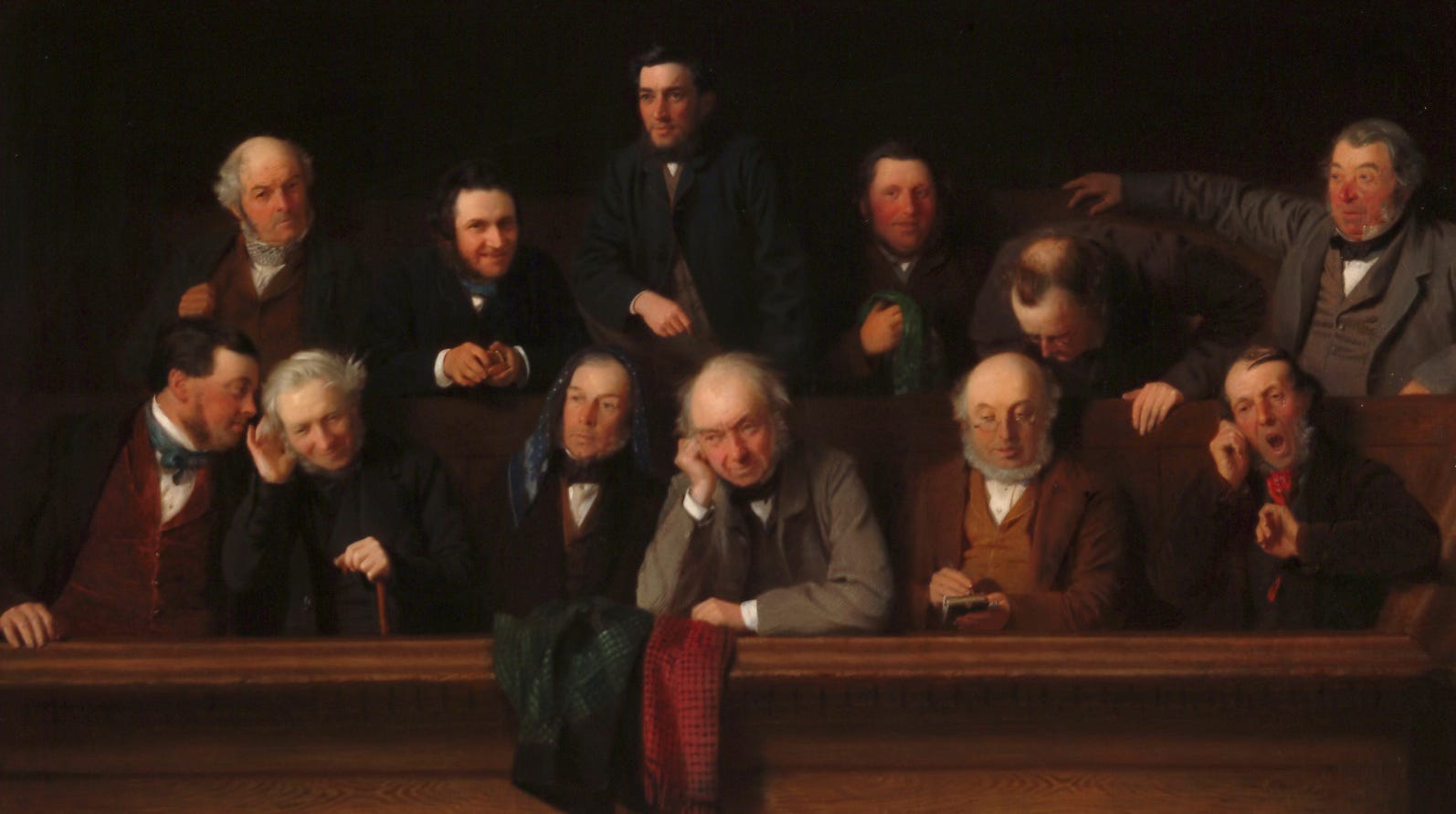
In the first days of September 1670, twelve London tradesmen were locked in a room at the Old Bailey and told they would receive neither meat, nor drink, nor fire, nor tobacco until they returned a verdict that the court would accept.1
Their crime was a verdict they had already returned.
Two weeks earlier, a 25-year-old Quaker named William Penn had stood in Gracechurch Street and preached to a few hundred people, outside a meetinghouse the law had barred him from. The law was the Conventicle Act: any religious assembly of five or more people outside the Church of England was a crime. Penn was arrested, and the state asked the jury to deliver the only acceptable verdict: unlawful.
But the jury looked at the evidence and concluded that Penn was guilty of speaking in Gracechurch Street and nothing more. And speaking in a street was not a crime.
The Recorder — with the Lord Mayor of London sitting beside him — called Penn a pestilent fellow and sent the jury back to reconsider. They returned the same verdict.
He sent them back again, this time with a threat: you shall not go home until we have a verdict that the court will accept. Then he made good on it with a locked room, enriched with cold and hunger. The jurors, led by a tradesman named Edward Bushel, came back a final time and hardened their answer into a single phrase.
Not guilty.
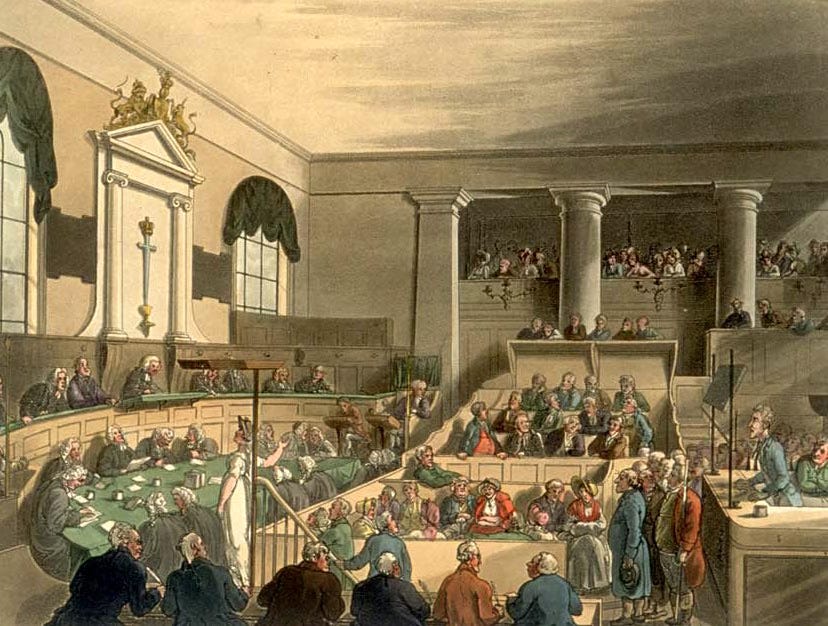
The court fined every juror 40 marks for the insolence and jailed the ones who could not or would not pay.
Bushel refused to pay. He spent the better part of nine weeks in Newgate prison before one of England's most senior judges freed him with a ruling that became a cornerstone of English common law: a jury may not be punished for its verdict.2
The Tell
“Reality is the only adequate validator.”
That assertion anchors “SpaceX and the Sentient Sun,” and Marc Andreessen uses it to explain the method he reveres above all others: Elon Musk’s Algorithm:
Step 1: Question every requirement: the thickness of a part, the test it must pass, the margin a safety agency demands. Each must carry the name of a real person, never a department or a committee, so that it can be questioned no matter how smart that person is. Requirements from smart people are the most dangerous, Musk warns, because people are less likely to question them.
Step 2: Then, delete every part and process you can. If you are not forced to add 10% of them back, you did not delete enough.
Step 3: Simplify what survives Step 1 and Step 2.
Step 4: Accelerate the cycle above.
Step 5: And only then, at the very end when things are stripped to their leanest, automate.3
For building a rocket this is genius. A requirement is dumb or smart for one reason: the booster lands, or it scatters across the Atlantic. The flame trench doesn’t read résumés and respects no credentialed expertise. It does not care who was in the room, how senior they were, or which committee wrote the spec. Question everything, keep only what survives the crucible of reality, and you can build for two cents on the dollar. SpaceX is the proof.4

Now, the men who have learned to build this way have started asking a bigger question. If Musk’s Algorithm can land a booster on a barge in the Atlantic, why can’t it help to govern an increasingly chaotic country, stuck governing like it’s 1975?
And underneath their question is an older one: not who is smart enough to decide, but what should make anyone’s decisions binding on the rest of us.
The Exhaustion
The last time you watched a congressional hearing, did anyone in the room appear to be trying to solve a problem?
We hold elections that everyone describes as existential and yet almost nothing that makes life better around the kitchen table changes.
Permits take a decade. The trains do not come because they’re a decade over schedule and billions over budget.
And every question in American life, from what your kids read to what truck you drive, has been sucked into the same endless, unwinnable game. A school board can spend forty minutes on a national culture war and four on the broken boiler.
Exhaustion is reasonable. We give the system everything — attention, anger, money, hope — and our lives don’t get better.
The Offer
So perhaps we should take Musk's Algorithm seriously as an approach to more than building electric vehicles and reusable rockets.
Peter Thiel wrote the founding document for this worldview in 2009. There is one sentence that has been endlessly quoted: “I no longer believe that freedom and democracy are compatible.”
But rather than quoting one line, read the whole essay.5
Thiel writes with a certain grief: a man who wanted liberty concluding, from the evidence of his life’s experience, that the ballot would never deliver it — “the prospects for a libertarian politics appear grim indeed” — and resolving that “the great task for libertarians is to find an escape from politics in all its forms.”
His worldview is simple and stark. Politics is a machine for dividing what exists, and no majority will ever vote for freedom over a larger share. Technology is the only human activity that creates instead of divides. He calls our history a deadly race between politics and technology — and the race will not be won at the ballot. It will be built, out beyond the reach of politics, on whatever frontiers are still open: the internet, the ocean, and of course, space. His prescription is to stop attempting to seize the state, and instead to route around it, the way the internet routes around a damaged cable.
Curtis Yarvin goes further: democracy is not self-government at all. Power in America is actually held by an unaccountable blob of agencies, universities, and media that no one elected and no one can fire, while responsibility is held by no one. His answer is that power should be owned the way a company is owned: explicit, concentrated, and accountable to results. From that belief comes his blueprint: a “patchwork” of small sovereign territories run the way well-run companies are run, with a CEO and a board, but accountable to results rather than voters, with residents free to leave for a better-governed territory the way you leave a bad phone carrier.6
Balaji Srinivasan is the newest and most optimistic of the three: the nation-state is just a technology — a few centuries old — and technologies get replaced. Geography no longer defines a “people”; shared values on the internet do. A real community is a group that chooses the same values, and a state is what that community eventually crowdfunds. From there, his launch sequence: start a country like a startup. A community online first, then a treasury, then a shared way of life and set of values, and only then, acquiring land to govern. Citizenship you opt into, and out of, like a software subscription.7
These three are more than lone eccentrics who happen to agree. They are a school of thought. They share a canon: a 1997 book called The Sovereign Individual, which predicted that the microchip would make the nation-state obsolete and turn governments into service providers competing for customers. Thiel wrote the preface to its reissue.
They share a world: Thiel funded Yarvin’s startup, Balaji was a partner at Andreessen’s firm, which published SpaceX and the Sentient Sun under its masthead.8
Taken together, the three worldviews converge on a single conviction: political legitimacy comes from building, not from voting.
A government, like a product, proves itself one way: it works, and people choose it. The only true consent is something you give by staying, and revoke by leaving, much more so than by casting a ballot once every four years. The founder replaces the statesman. Adoption replaces the election. The only discipline power needs is the one the market has always trusted, at least in theory: the customer’s freedom to walk.9
It is Musk’s Algorithm, scaled from the factory floor to civilization. In their telling, the democratic state is the one machine his method cannot fix: a generator of requirements that carry no name. Written by agencies, settled by committees, and sealed within the endless arguments. Requirements no one may question and no one can delete.
Free the state from having to argue and give it an owner, and government finally becomes something Musk’s Algorithm can run on. Question every requirement of the city. Delete the process that does not deliver. Simplify, accelerate, automate. And let reality validate the result — the streets, the trains, the housing — where reality, now, means not physics but the market: whether people come, and whether they stay.
But their greatest leap forward is what SpaceX and the Sentient Sun adds: artificial intelligence. Make intelligence abundant with the captured sun powering it, and the remaining case for politics thins toward nothing.
Scarcity was the reason we fought. AI and robots together end scarcity.
Competence was the reason we argued over who governs. AI supplies superintelligent competence on demand.
When we assemble the whole picture it has an elegance to it, even a form of beauty.
A city that works. Streets clean, trains silent and on time, and housing abundant because no committee of self-interested incumbents can veto it.
Governance run by people selected the way SpaceX selects engineers. For demonstrated ability, nothing else. The system disciplined the way SpaceX is disciplined: perform or be replaced, because the residents can always leave.
No campaign ads. No hearings. Politics shrunk from a war over your soul to a subscription you could cancel.
Your life handed back to you: your work, your family, your garden, your church, and whichever gods or games you love.
The machines do the work. The competent keep the lights on. The abundance arrives like water from the tap, and no one ever asks you to attend a contentious meeting again.
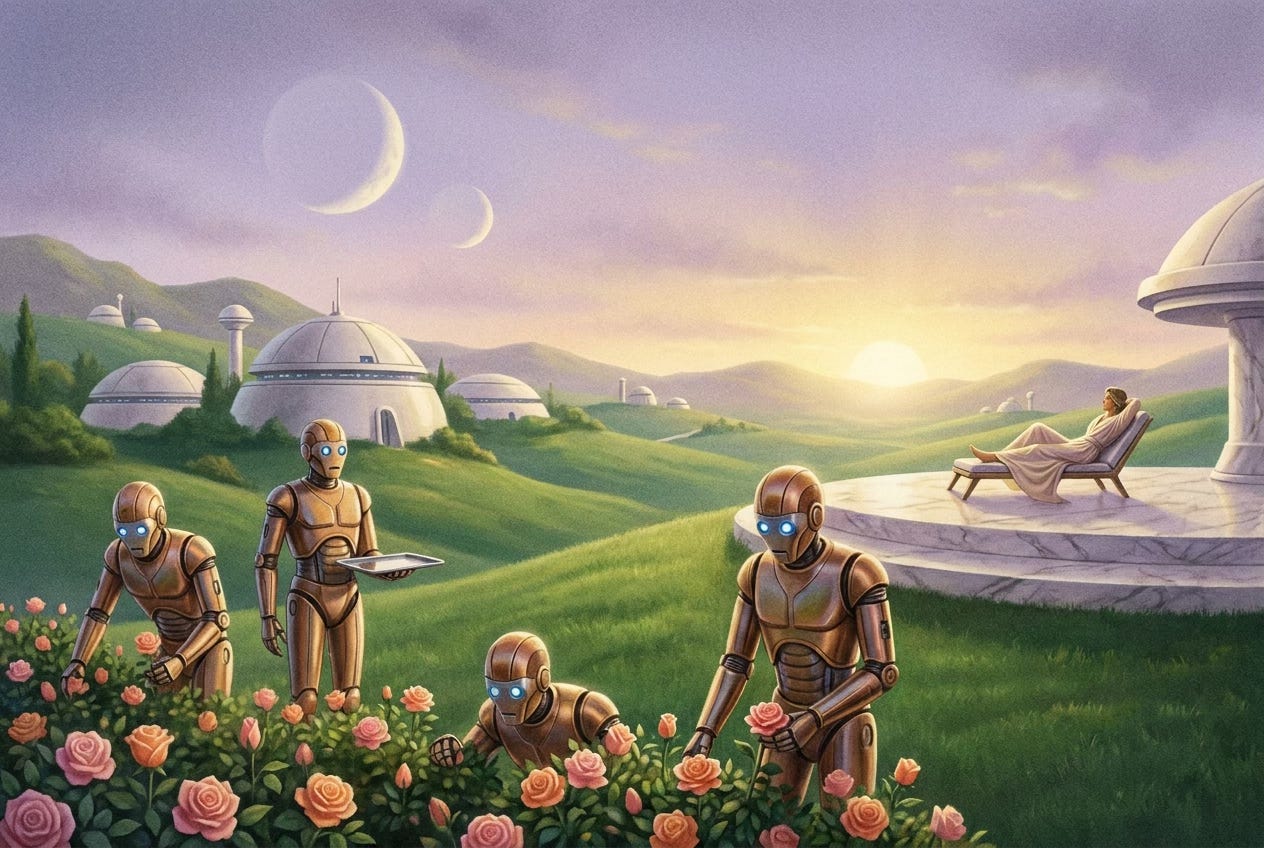
You might have exhaled as you read that vision. I certainly did in writing it. I grew up inside versions of this future, in the pages of dog-eared paperbacks, from the robot-tended estates of Asimov’s Aurora to the orbital gardens of Elysium. So did the men now building it.10
After all, the barge the SpaceX booster lands on is named for a starship out of an Iain Banks novel. We have been reading the same shelf in the library our whole lives.
The exhale is partly recognition.
The Turn
But what, exactly, would we be relieved of in this idyllic future?
We would be unburdened from deciding. The weight lifted would be the weight of being asked to have a view on the border and the budget and the school board and the war, asked to argue with your neighbors, and asked to live with verdicts you voted against.
If you don’t like it, you only have to make one decision: leave. The offer implicit in their particular form of utopia is that you will never have to govern again, simply opt-in or opt-out.
But the seductiveness of their vision depends in part on us forgetting why we’ve become so exhausted in the first place.
Americans had a thriving version of Yarvin’s prescription for self-government. We had our own power. We owned things. America was a patchwork of small self-governing institutions, with community boards and leadership, accountable for delivering for the communities they served.
The citizen now drowning in one national scream once governed constantly, and we barely noticed. The co-op that bought the harvest. The mutual that insured the house. The bank that held the town’s own savings. The firm with your name written in ink on a share. The lodge, the union hall, the church board — every one of them a room where ordinary people, no credentials between them, argued out the decisions that touched their own lives and lived with the verdict.
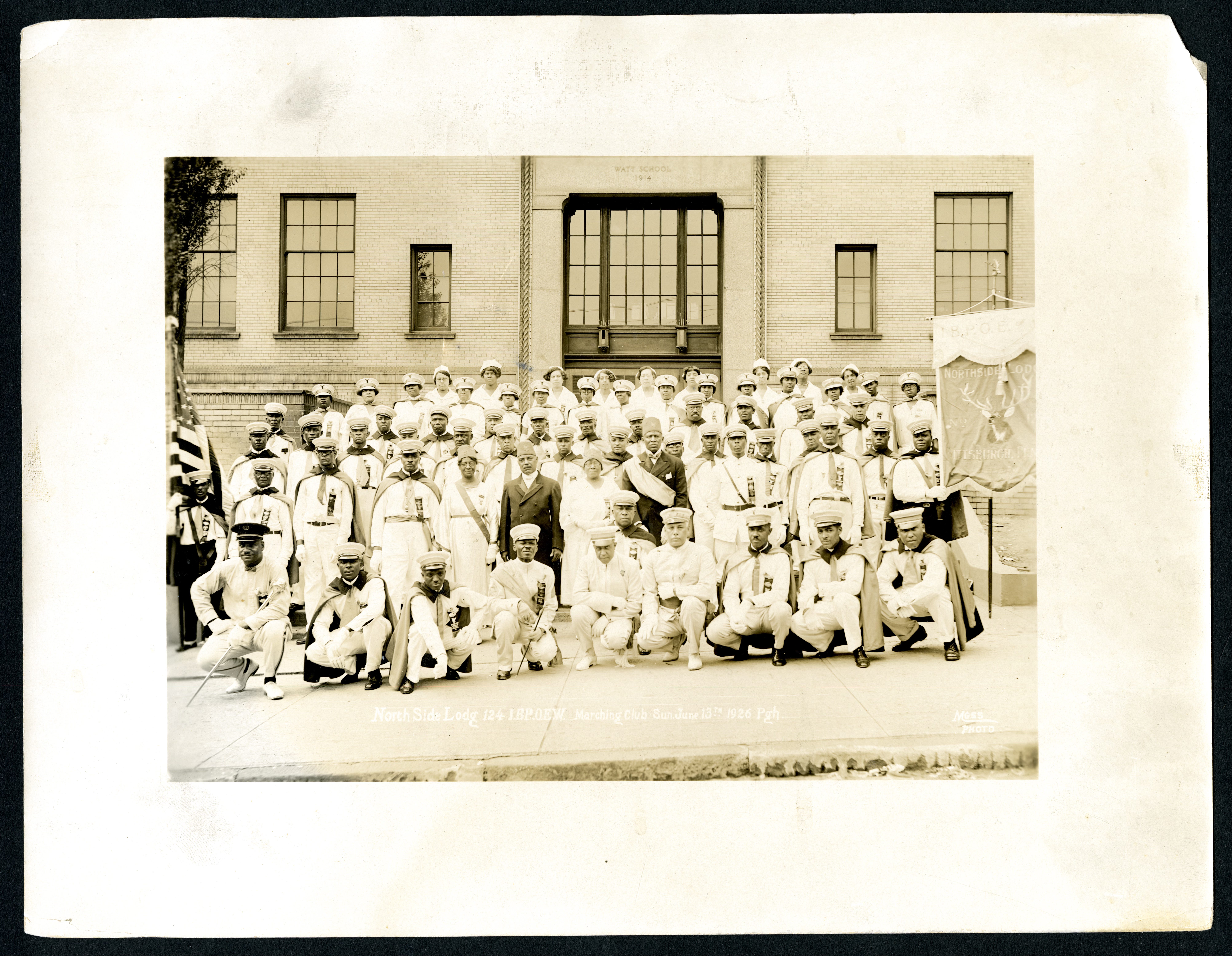
That is what self-government actually is, and almost none of it ran through Washington, DC.
National politics sat on top of a thick bed of those small, owned, daily courtrooms, and therefore addressed only the rare questions that bedrock of self-governance could not answer.
When you engineer away every room where a person used to govern except the one you walk into every four years for a few minutes, that last room has to hold all the moral weight of a society.
Our elections become the only jury hundreds of millions of people have left. Of course it feels existential. Of course it curdles into theater. It is the last courtroom in town, and we are all trying to try every case in it at once.
So the philosopher-builders’ diagnosis is correct, but they have it exactly backwards. Rather than evidence that people cannot govern themselves, the exhaustion they observe is the wreckage of a half-century spent removing every place people did govern, until one overloaded ballot was asked to carry a civilization’s worth of agency.
Democracy in America is not sick from too much self-government. It is sick from almost none.
Who did the demolishing?
Wall Street ran the first wave, melting the mutuals, the local banks, and the member-owned firms into tickers.
The Valley ran the second, gathering what remained into platforms: the marketplace that replaced the town’s merchants, the feed that replaced the town’s paper, the app that replaced the dispatch co-op.
And it built them on a doctrine Thiel himself would later write write down in Zero to One: competition is for losers, the rational firm becomes a monopoly, and the well-built moat makes sure the customers can never leave.
Put their two canonical axioms side by side, because the whole worldview lives in the gap between them.
Exit is the only true freedom.
And, the perfectly built company is one its users can never leave.
The bedrock did not simply erode. It was liquidated to dust and its replacements were engineered — places no one owns and can never leave — by the very ideology now offering to govern what remains.
Which means the cure they offer — remove the last room too, hand the verdicts to the competent, and let exit discipline the kings — is not a cure at all. It is in fact the disease, administered at a fatal dose.
The one discipline it keeps, exit, is the one their own moats are built to remove.
We got exhausted by losing our everyday juries. They propose to fix the resulting exhaustion by taking the final one.
Patents of Nobility
And to whom would the verdicts then go?
Musk’s Algorithm works because it asks reality questions reality can answer. Does the booster land? Does the train run on time? These are questions of what is — and on questions of what is, reality truly is the only adequate validator. Test, measure, and the world hands down the verdict.
But listen to the questions the beautiful city they offer us would have to answer. Who should own the captured sun? Who governs the first million people on Mars? What is a human life for, once the machines do the work?
Question those requirements all you like, make them “less dumb,” and then watch what reality tells us.
Nothing lands, and nothing crashes. These were never questions about what is. They are questions about what ought to be. And reality has no opinion about ought. It can prove the train arrived on time. It cannot prove who deserves what housing, what a childhood is for, or when the profitable thing is wrong.
No booster lands on ought.
And notice that Musk’s Algorithm has already disqualified every rival answer before the question is even asked.
Credentials? Those are awarded by people who have never had to land anything.
Deliberation? That is the committee his Algorithm exists to route around.
Markets? They price what people will pay, not what a society should permit.
Run the first step honestly and the only authority left standing at the end is the brilliant mind that did the questioning.
Go back to the sentence that started all this: reality is the only adequate validator.
It sounds like humility before the universe. But in fact it was always the tell. Refuse every validator but reality, and on the questions where reality can only be silent, there is no authority left but the person running the Algorithm.
Strip everything else away, and the only qualification left is raw intellect. Which raises the question this whole worldview quietly rests on: who certifies the intellect?
With no flame trench to test it against, a “superior mind” has no measure outside those already in the room. It cannot be checked against a standard, because the standard was the first thing questioned. It can only be recognized — and the only recognition that counts comes from the people who already believe they are the superior minds.
So the test for a superior mind becomes agreement with the minds that have already declared themselves superior. The smart are whoever the smart call smart.
It is an aristocracy issuing its own patents of nobility, in meritocracy’s clothes.
The old aristocracy argued the same case in nearly the same words. The men who owned the land had the deepest stake in the kingdom, and the leisure atop its surplus to think, so the deciding was theirs — with a priesthood on retainer for the questions of ought. That pitch has survived a thousand years unchanged. Only the assets are new. Rather than land we have platforms.
None of this requires villains. The theory does not need bad motives, and none of these men need think of themselves as aristocrats. They identify as builders. But concentrated decision rights produce aristocratic power regardless of what the people holding them believe they are doing.
The newest hope is that AI will break the loop: build an intelligence vast enough, and let it settle authoritatively what humans have argued about for as long as there has been civilization. Let the model be the booster that finally lands on the questions of ought.
But a model trained on us holds no ought we did not hand it. It can only give our own convictions back to us, dressed in the rigor of mathematics. And whose convictions, exactly? Those of the people who built it, own it, and decide what it is for.
Superintelligence does not break the loop. It chrome-plates it. And as Who Owns the Sentient Sun argued, the god now co-signing the verdict is privately held.11
Twelve
Let’s revisit the Old Bailey, where those twelve men were handed exactly the question that neither Musk’s Algorithm nor the aristocracy can answer.
Nothing about Penn’s case was a dispute of facts. Penn preached. Everyone saw him. He admitted it proudly. The court believed it had handed the jury a question of fact. The jury discovered that the fact could not be separated from a judgment reality could not settle: whether speaking peacefully in a street could justly be made a crime.
The legal system had put that verdict in the hands of a tradesman and eleven other ordinary men, even if the men in charge that day, the judges and the Lord Mayor and the whole apparatus of the state’s certainty, tried desperately to take it back.
Notice who the law did not ask. Not the bishops, who had catechisms for exactly this question. Not the judges, who knew the law by heart. Not the philosophers. The seventeenth century had experts in ought the way we have experts in code. The law walked past all of them to reach twelve men whose only qualification was that they lived under the same laws they were asked to apply.
A jury’s legitimacy has never come from intelligence or expertise. It comes from something no algorithm can generate and no aristocracy can fake: shared consequence. The twelve must live inside the world their verdict creates. That is the whole point, and it is why their answer could stand against every credential in the room.
Shared consequence does not make a verdict wise or just. Juries have carried every prejudice of the communities that seated them, and American self-government excluded most Americans for much of its history. The claim is narrower: it is the one part no expert system can supply.
Exit is a genuine form of power. It can discipline a firm, a platform, and even a municipality.
But it cannot replace voice when leaving means abandoning a home, a history, a livelihood, or the people who cannot follow you.
And the better “patch” inevitably has a bouncer. Admission is selection — by money or by creed — which means the people who most need somewhere to go are the last to be let in anywhere. Nobody is founding a patch for getting your kids fed and schooled.
The beautiful city their arguments assemble is built entirely on exit: the founder who can leave when the patch sours, the citizenship you can cancel like a subscription. It is an engineering project for escaping shared consequence.
Yarvin at least does not hide it. He states it as the design goal: all exit, no voice. The network state does not fail the jury test by accident. Escaping the jury is the product.
This is not in fact a new form of legitimacy. It is the oldest form of illegitimacy there is.
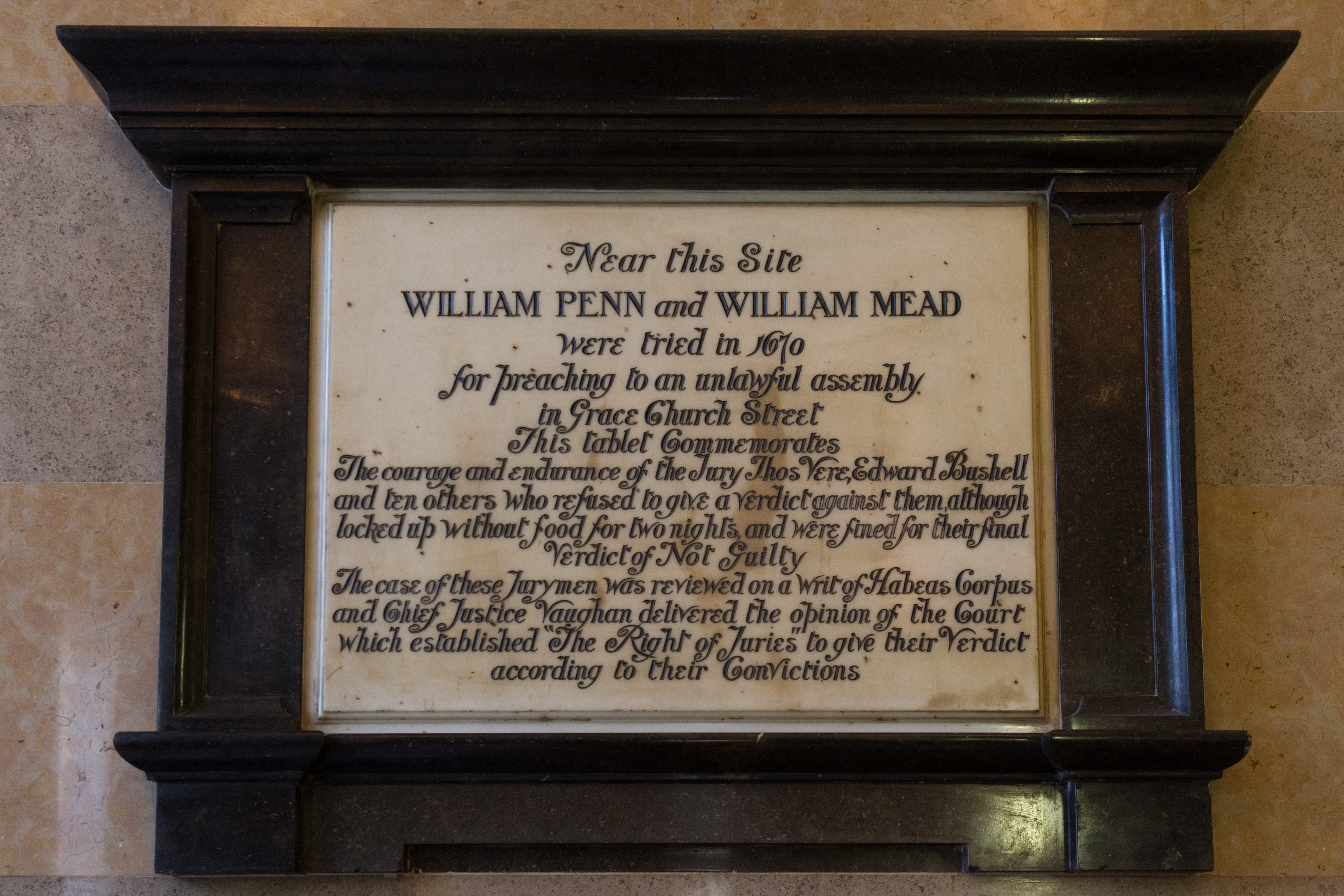
A jury is not a panel of the smartest. It is twelve people made to do what Musk’s Algorithm intentionally rejects: argue it out, face to face, until they can live with the answer together. The jury is a free society saying, out loud and under oath, that the verdicts that matter most are not deferred upward to the worthiest.
They are reasoned sideways, among the people who have to live with them.
The men who built the American constitution knew this story cold. After all, William Penn, the young preacher the jury saved, sailed west twelve years later and founded Pennsylvania. The jury survived into the Constitution and the Bill of Rights as a theory of legitimate judgment by ordinary citizens.
That is the move the philosopher-builders cannot see, because rather than look around they are busy looking up: at the founder, the genius, and the superintelligent model.
The answer has always been across the table.
Voice
The deepest objection to an aristocracy of the brilliant is older than the quarrel between “left” and “right” we have sorted ourselves into.
The men who built the American government feared few things more than a clever few, certain in their wisdom, and confident they should run it. They scattered power across a continent so that no genius could gather it back up. It was the same terror that seized Burke as he watched confident men redesign France from first principles.
You do not need to hate these philosopher-builders to turn down the bargain. You only need to hold them to their own promises.
They promise that the freedom to leave will keep the powerful honest. And they teach every founder to build the thing no one can leave.
The bargain does not fail because the men offering it are villains. It fails on their own terms, before the first patch is ever founded.
The answer to who decides is the twin of the answer in Who Owns the Sentient Sun.
There, abundance should not belong to one pair of hands. Here, neither should the verdict on what is true and legitimate.
Ownership of the surplus and ownership of the decision were stripped together, and they return together, not by finding better aristocrats, but by giving us back more rooms to reach our verdicts in.
Let us rebuild our hundred small juries: a real say in the firm, the co-op, the fund, and the town. And then the one vote every four years no longer has to carry the meaning of a life. The load comes off the ballot. Politics gets to matter less, which is the only way it ever stops being a war.
That is not democracy failing. That is democracy, at last, able to breathe again, and it is the only offer available to us that cures the exhaustion instead of anesthetizing it.
The Algorithm is a magnificent way to build a rocket and a catastrophic way to run a civilization, for a single reason: a civilization has no booster to land. The only thing that can validate how we live together is what sat starving in that room in 1670: some of us, all of us, no wiser than we have ever been, reasoning it out together, badly, at cost, and refusing to hand the verdict to anyone who promises to spare us the argument. No matter how brilliant.
Edward Bushel could have paid the fine, and left. But he knew the true cost.
Further Reading
On the trial and the case:
The People’s Ancient and Just Liberties Asserted (1670) — the contemporaneous account of the Penn–Mead trial, including the jury’s confinement and the Recorder’s threats, much of it in dialogue.
Bushel’s Case, 124 E.R. 1006 (Court of Common Pleas, 1670) — Chief Justice Vaughan’s opinion freeing the jurors.
Thomas Andrew Green, Verdict According to Conscience: Perspectives on the English Criminal Trial Jury, 1200–1800 (1985) — the scholarly authority on how English juries came to judge according to conscience, with the Penn trial and Bushel’s Case in full context.
The offer, in its authors’ own words:
Peter Thiel, “The Education of a Libertarian” (Cato Unbound, April 2009) — the founding document; the grief and the three escapes.
Peter Thiel with Blake Masters, Zero to One (2014) — the monopoly doctrine; read alongside endnote 9.
Curtis Yarvin (as Mencius Moldbug), the “Patchwork” essays (Unqualified Reservations, 2008) — the floor plan, in his own words: “all ‘exit,’ no ‘voice.’”
Balaji Srinivasan, The Network State (2022) — the launch sequence.
Marc Andreessen & Michael McGuiness, “SpaceX and the Sentient Sun” (a16z, 2026) — the machines added; the essay this one answers.
The school’s canon and its history:
James Dale Davidson & William Rees-Mogg, The Sovereign Individual (1997; reissued 2020 with a preface by Peter Thiel) — the prophecy the school inherited: the microchip dissolves the nation-state into competing service providers.
Richard Barbrook & Andy Cameron, “The Californian Ideology” (1995) — the earliest map of the Valley’s marriage of counterculture and market libertarianism, written before the school had a name.
Walter Isaacson, Elon Musk (2023) — the canonical statement of the Algorithm, including the requirement that every requirement carry a name.
The world we dismantled:
Alexis de Tocqueville, Democracy in America (1835–40) — the jury as “a gratuitous public school, ever open,” and the associational bedrock beneath American politics.
Theda Skocpol, Diminished Democracy: From Membership to Management in American Civic Life (2003) — the definitive account of how America’s mass membership institutions — the lodges, the granges, the mutuals — gave way to professionally managed advocacy, and what was lost when they did.
Robert Putnam, Bowling Alone (2000) — the collapse of the associational bed, measured.
The argument’s instruments:
Albert O. Hirschman, Exit, Voice, and Loyalty (1970) — load-bearing here: the essay’s blade is that exit is the engineered escape from shared consequence.
Edmund Burke, Reflections on the Revolution in France (1790) — the older fear of the clever few redesigning a society from first principles.
David Hume, A Treatise of Human Nature (1739), Book III — where the essay's hinge was first written down: no accumulation of is ever yields an ought. Hume observed that authors slip from describing the world to prescribing it "imperceptibly," never justifying the leap — the same unexamined leap the Algorithm makes when it crosses from landing boosters to governing citizens.
The companion:
Evan Burfield, “Who Owns the Sentient Sun?” — the first half of the question: who owns the abundance. This essay is the second: who gets to decide.
The trial of William Penn and William Mead, Old Bailey, September 1670, under the Conventicle Act of 1670 (which replaced the lapsed 1664 act; the five-or-more-persons threshold is the statute’s own. Formally, the indictment charged common-law unlawful assembly; the Act was why the meetinghouse was barred). The jury’s “guilty of speaking in Gracechurch-Street,” the demand for “a verdict that the Court will accept,” the confinement order — “You shall be lock’d up, without Meat, Drink, Fire, and Tobacco” — and the “pestilent fellow” line are all from the contemporaneous trial account, The People’s Ancient and Just Liberties Asserted (1670); the confinement order, the threat, and “pestilent fellow” were the Recorder’s, with the Lord Mayor beside him on the bench.
Bushel’s Case, 124 E.R. 1006 (Court of Common Pleas, 1670): Chief Justice John Vaughan’s November 1670 opinion, releasing the jurors on habeas corpus and holding that a juror may not be punished for the verdict. Four jurors — Edward Bushel, John Hammond, Charles Milson, and Gregory Walklet — refused the forty-mark fine and sat roughly nine weeks in Newgate, from the September verdict to Vaughan’s November ruling. On the holding’s scope: Vaughan’s opinion protects the juror from punishment for the verdict; it did not establish a right of juries to judge the law itself, and the broader doctrine of jury nullification remains contested.
Marc Andreessen & Michael McGuiness, “SpaceX and the Sentient Sun” (a16z, 2026) — the source of “reality is the only adequate validator.” The five-step Algorithm is canonically stated in Walter Isaacson, Elon Musk (2023); step one’s demand that every requirement carry a person’s name, and the warning that “requirements from smart people are the most dangerous, because people are less likely to question them,” are Isaacson’s verbatim rendering of Musk’s formulation.
The cost revolution is real and documented; the receipts are in the companion essay, “Who Owns the Sentient Sun?”, and its apparatus.
Peter Thiel, “The Education of a Libertarian,” Cato Unbound, April 2009. All quotations verbatim from the essay: “I no longer believe that freedom and democracy are compatible”; “the prospects for a libertarian politics appear grim indeed”; “the great task for libertarians is to find an escape from politics in all its forms”; “we are in a deadly race between politics and technology.” The essay names three escapes — cyberspace, seasteading, outer space. The body’s “machine for dividing what exists” framing is this essay’s summary of his position, not his phrasing.
Curtis Yarvin (writing as Mencius Moldbug), the “Patchwork” essays (Unqualified Reservations, 2008): sovereign joint-stock realms governing territorial “patches,” shareholders selecting a chief executive “whose decisions are final,” residents holding “the right to remove oneself and one’s assets from the realm, at any time, no questions asked.” The design is, in Yarvin’s own formulation, “all ‘exit,’ no ‘voice.’” Precision note: Yarvin’s own coinage “the Cathedral” names the consensus-manufacturing institutions — the press and the universities; the unelected permanent bureaucracy is, in his account, the machinery that consensus steers. The body’s “blob of agencies, universities, and media” is a composite of his full picture, not his definition of the Cathedral.
Balaji Srinivasan, The Network State (2022), his own one-sentence definition: “a highly aligned online community with a capacity for collective action that crowdfunds territory around the world and eventually gains diplomatic recognition from pre-existing states.” Opt-in membership and the online-first, land-later sequence are his framing throughout. Fairness note: Balaji holds that technology can reduce the costs of exit; Yarvin acknowledges exit fails without receiving realms; neither engages the asymmetry the essay presses — that the powerful exit most easily — and Thiel’s essay does not raise it.
The Sovereign Individual is James Dale Davidson and William Rees-Mogg (1997); Thiel wrote the preface to the 2020 reissue. Yarvin’s startup is Urbit (the company Tlon): Thiel’s Founders Fund invested in 2013, and co-founder John Burnham was a 2011 Thiel Fellow — Andreessen Horowitz co-invested in the same 2013 round. Balaji Srinivasan was a general partner at Andreessen Horowitz from 2013.
In theory — because the school's founding thinker built his career teaching founders to disable exactly this discipline. Thiel’s Zero to One (2014, with Blake Masters) is a manual for escaping competition: “monopoly is the condition of every successful business,” and the Wall Street Journal adaptation ran under the headline “Competition Is for Losers” (September 12, 2014). The well-built company, on his account, is durable precisely because its customers do not leave — proprietary technology, network effects, scale. He would answer that a true monopoly earns its position by being ten times better, not by trapping anyone. Fair enough. But the tension stands: the worldview proposes to govern civilization by the one force — the customer’s freedom to walk — that its own doctrine teaches the successful founder to engineer away.
The shelf, for the record: Aurora is the robot-served Spacer world of Asimov's The Robots of Dawn (1983) — a perfected civilization that, in Asimov's larger telling, quietly dies of its own comfort. Elysium is Neill Blomkamp's 2013 orbital habitat for the people who could afford to leave. And SpaceX's autonomous drone ships — Just Read the Instructions, Of Course I Still Love You, A Shortfall of Gravitas — are named for the sentient starships of Iain M. Banks's Culture novels; the homage is Musk's own, made after Banks died in 2013. The joke the shelf plays on its readers: Asimov filed this future under decline, Blomkamp filed it under dystopia, and Banks's post-scarcity utopia is a commons owned by no one. The books kept trying to tell them something they couldn’t see.
The certification loop and the machine validator; the private god is the subject of the companion essay’s apparatus. The section’s title is literal: the Constitution’s first article forbids the United States to grant any title of nobility (Art. I, §9) — the founding generation legislated against self-certifying aristocracy by name.