
A reply to a16z’s “SpaceX & the Sentient Sun.”
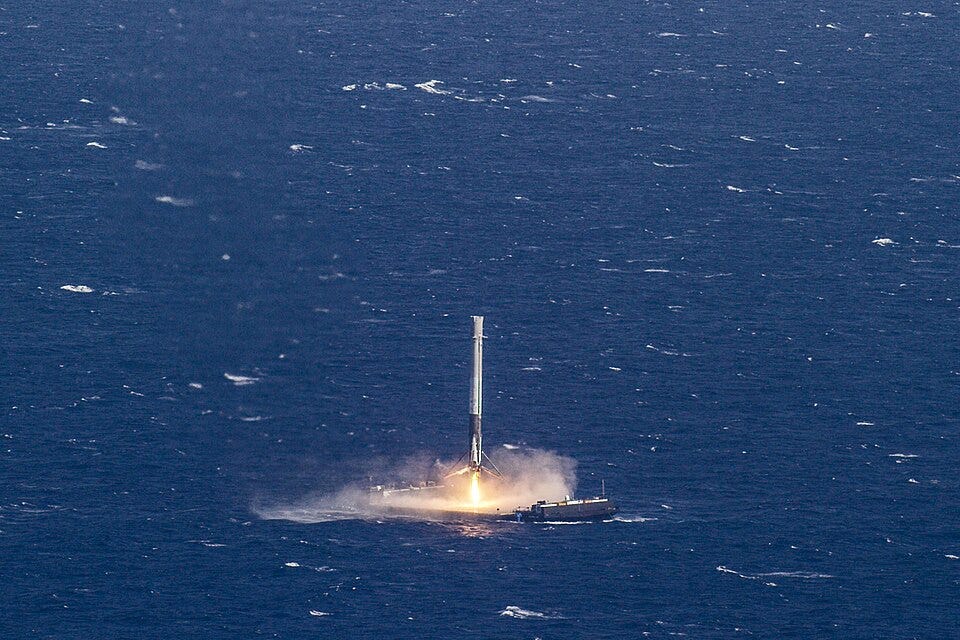
“Humans handle being human, which turns out to be a full-time job.”
“…his most interesting characters are the ones who leave it.”
— Marc Andreessen & Michael McGuiness, SpaceX and the Sentient Sun
The Spreadsheet
In February 2002, a thirty-year-old fresh off PayPal sat on a flight out of Moscow, having failed to buy a refurbished missile. He opened a spreadsheet. He listed the raw materials of a rocket — aluminum, titanium, copper, carbon fiber — and what each one cost. The total came to about 2% of the price he’d been quoted.1
“Clearly,” he said later, “you just need to think of clever ways to take those materials and combine them into the shape of a rocket.”
That spreadsheet is one of the more remarkable documents of our century.
At SpaceX his salary is $54,080. The rest of his compensation package vests only if the company reaches $7.5 trillion in market cap and a million people live on Mars.2 That is the scale of the man’s confidence. He has mostly been right so far.
Those numbers are where Marc Andreessen and Michael McGuiness open their new essay, “SpaceX and the Sentient Sun.”3
From there they work backward from a destination most people would consider science fiction. Imagine a civilization that harvests a real fraction of the sun’s energy, thinks with artificial intelligence vastly smarter than Claude, and lives across more than one planet. Work backward from that vision, they argue, and every element of SpaceX clicks into place: Starlink funds the rockets, the rockets make orbit cheap, and cheap orbit puts solar farms, data centers, and Moon factories within reach.
The SpaceX mission statement the Sentient Sun quotes makes the ambition explicit: build “a sentient sun … and extend the light of consciousness to the stars.”
It is a stirring case for why leaving Earth matters. So before I disagree, let me disclose that I invested in SpaceX at a $75 billion valuation, a number that already looks quaint, because the conviction underneath the whole enterprise genuinely inspires me.
Human beings need horizons.
I choose the word horizons carefully. Rather than “expansion” or “conquest,” a horizon is the open question, the hard journey, the frontier that asks us to lean into curiosity. A species that keeps reaching and discovering stays open and alive somewhere a balance sheet can’t measure.
On that, Andreessen and I agree.
The Gods
But the Sentient Sun does something with an important sleight of hand. Underneath the case for the mission runs an unspoken case — about who, in the world it imagines, gets to matter. Somewhere in its many thousands of words it slides from a claim about human nature to a claim about human power — from what people need to who gets to provide it — and it makes the move so smoothly that I doubt the authors ever realized they were doing it.
Its north star is a series of novels by Iain M. Banks about a civilization called the Culture. Musk named his rocket-landing drone ships after starships in those books, and once told an AI-safety summit the Culture novels are “by far the best envisioning of an AI future.”4 So it’s worth knowing what the Culture actually is, in case you don’t happen to be a hardcore sci-fi buff.
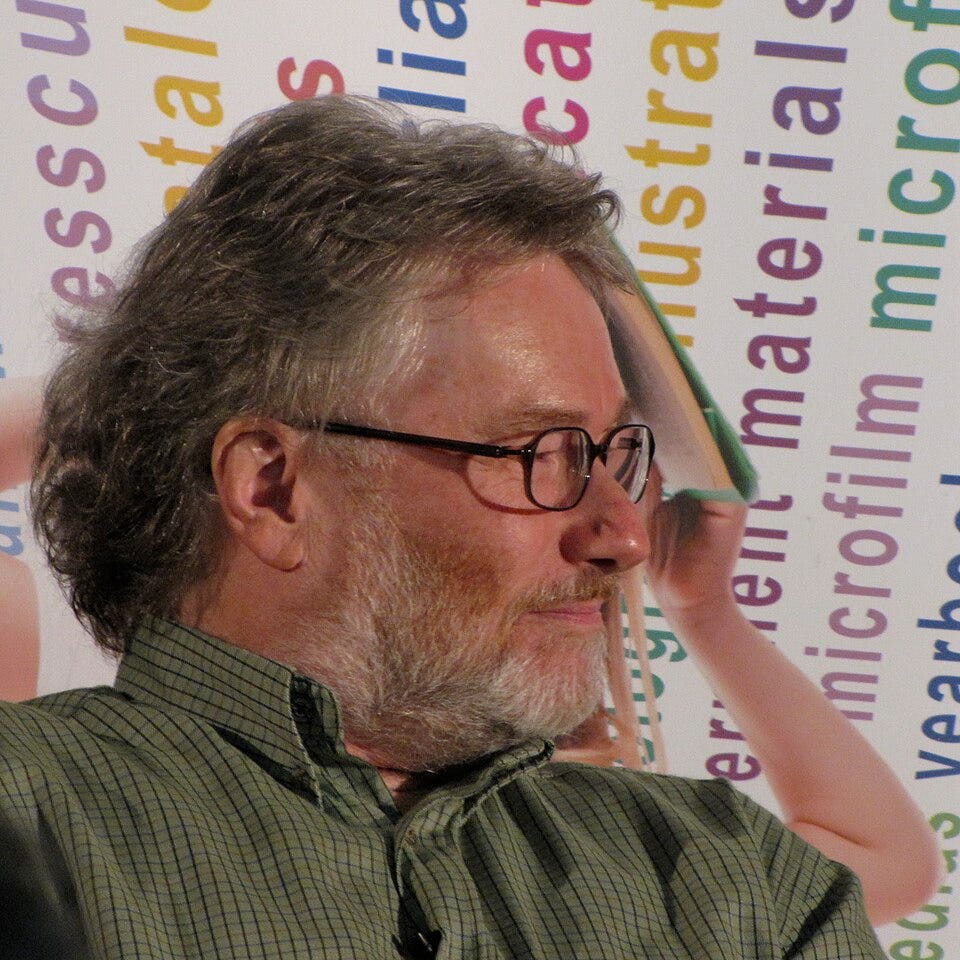
The Culture is a galaxy-spanning society that has solved scarcity. Superintelligent AIs — called Minds — run the material world: they fly the ships, manage the habitats, and carry the staggering logistics of abundance. Every material need is handled, which leaves the citizens free to spend their long lives on art, sport, romance, mountains, dead languages, and impossible problems.
It’s one of the more attractive utopias anyone has crafted.
But the Culture rests on a single feature that the abundance distracts you from. The Minds belong to no one — they aren’t held in common, exactly, but they’re sovereign: persons no one can claim title to. The intelligence that runs the world is a citizen, rather than an asset. The Minds are the senior partners to humanity, and you can no more own one than own a senior colleague.
Put differently: the gods in the Culture aren’t for sale.
That is the critical implicit assumption. Change it and our utopia starts to look much darker.
Owned
Here is the vision for humanity’s future that the Sentient Sun describes.
Solar power harvested in orbit.
Data centers in space drawing more power than every data center on Earth combined.
Factories on the Moon flinging satellites into the abyss.
Intelligence handling the work of civilization.
Abundance, in other words — the Culture’s abundance, almost exactly.
But implicit in Andreessen and McGuiness’s vision is every piece of the abundance is owned.
The compute, the rockets, the lunar factories, the orbital power, the artificial intelligence itself — it’s all owned. And not by everyone. By a very short list. The Sentient Sun notes, almost in passing, that two customers — Anthropic and Google — already pay some $26 billion a year between them to rent compute from SpaceX’s data centers.5
In the Culture, intelligence is a citizen. In the future the Sentient Sun describes, intelligence is a product — owned and metered by its proprietors.
A culture where the Minds are privately held is not the Culture. It’s a kingdom with very good stage lighting.
Read their Sentient Sun essay again.
It is lavish on production statistics — terawatts, wafers, dollars per kilogram, launch cadence, the merger math. A well-orchestrated symphony of how the abundance gets made. But it barely touches who owns the abundance once it exists, who governs the million-person city, who decides.
On the single question that settles whether this is heaven or a beautifully appointed dystopian cage — whose is it? — the Sentient Sun has nothing to say.
I genuinely don’t think their silence is a strategy. Rather it’s a blind spot. Andreessen has spent his life in a world where the answer to “who should own the thing” is so obvious that the question is never asked: the people who build and finance it. Of course.
In that world, concentrated ownership is simply the water they swim in. So when Andreessen reaches for a vision of universal human flourishing, he reaches sincerely — and carries the assumptions of his own world up into the stars without unpacking a single one.
What You Can’t Mass-Produce
And over time, that unasked question metastasizes into what turns the whole vision dystopian.
There is a kind of wealth you can mass-produce and a kind you can’t.
You can manufacture calories, kilowatts, and pressurized square meters. You can make the factories good enough that everyone has whatever they want.
But meaning resists the factory — the experience of being a cause in the world rather than a well-cared-for effect. There is only one steering wheel on a ship, however large the ship.
The Sentient Sun knows this. It admits it without intending to, in its loveliest passage. The Culture is paradise, Andreessen and McGuiness write, but Banks’ “most interesting characters are the ones who leave it.”
The frontier is where meaning lives. The people who go to Mars are the ones who refuse the comfortable life for the hard, real, consequential one.
Read that as a sentence about human nature and it’s beautiful.
Read it as a sentence about who gets what, and the dystopia comes into focus.
It describes two classes.
A few who get the frontier — the building, the risk, the deciding, and so the meaning. And everyone else, who gets the amenities: the sport, the romance, the dead languages, the full-time job of “being human” with agency over nothing that counts.
This isn’t the complaint that only one man got rich. When SpaceX went public it turned more than 4,400 of its own employees into millionaires — even a welder who took $10,000 in stock when he was hired walked away a millionaire.6
But a share is not a say.
Those new owners govern none of it: not the mission, not the price, not who gets left behind. And the value was never made by payroll alone. It runs through everyone the enterprise touches — the suppliers it leans on, the customers who fund it, and the public that carried its risk. Ownership that stops at the founder, or even at the employees, still leaves nearly everyone who made the endeavor possible holding a ticket instead of a title.
One class gets a stake. The other gets a very generous check — even when the check is paid in shares.
And the Sentient Sun considers that check the ideal of human flourishing.
Humans need horizons is a claim about the soul. Humanity needs maximal expansion, owned and directed by us is a claim about a balance sheet.
The first is true. The second rides on its coattails. The whole gravitational pull of the Sentient Sun is to make you feel the first so deeply that you wave the second through without checking the math.
A horizon that belongs to one man is not a horizon: it’s a great view from his property.
The Builder’s Claim
This is where the honest objection arrives: the builder earned this.
The people who own it are the people who took the risk, raised the capital, assembled the organization, and did the thing everyone else only talked about. Without the spreadsheet there is no rocket. Without the rocket there is no horizon. A man who builds the road has a claim on the toll.
Except the road was never paved with private money alone. I know it better than most, because I wrote the book on how this is done: Regulatory Hacking. I gave Elon Musk its final chapter — the ultimate regulatory hacker. No one alive is better at turning public rules, public money, and public risk into private advantage, and I documented it carefully: how NASA became the anchor that carried SpaceX, contract after contract; how he set seven states bidding against one another to underwrite a single Tesla factory and walked off with $1.4 billion in tax breaks and free land.7 The Sentient Sun even tells the story of the $1.6 billion NASA contract that pulled SpaceX back from death8 — Musk near tears, “I love you guys” — and tells the story as rescue.
I would still defend every word I wrote in awe of the craft. But what I never asked, in three hundred pages, was the ownership question. The public — all of us — were the first customer, the subsidizer, the de-risker. And for all of it, we took back a contract: a check. Elon Musk took the company: the stake.
Public money, private ownership — the asymmetry was there at the founding, and it has only compounded.
Building something earns a claim. It can earn a fortune. What it cannot earn is a perpetual title to the civilization the building makes possible. And the claim is smaller than it looks, because the public was a founding investor that never got a share. At some point the thing being built stops being a company and becomes infrastructure: the intelligence a society thinks with, the power it runs on, the ground a million people stand on. The cap table and the board seat become too small a container.
We have crossed this line before.
The Transcontinental Railroad, the very parallel the Sentient Sun reaches for, was built by private companies on public land and then bound by law to serve as a common carrier, because a nation could not let the continent’s circulatory system answer only to its shareholders.9 We have even, on paper, already called outer space “the province of all mankind.”10
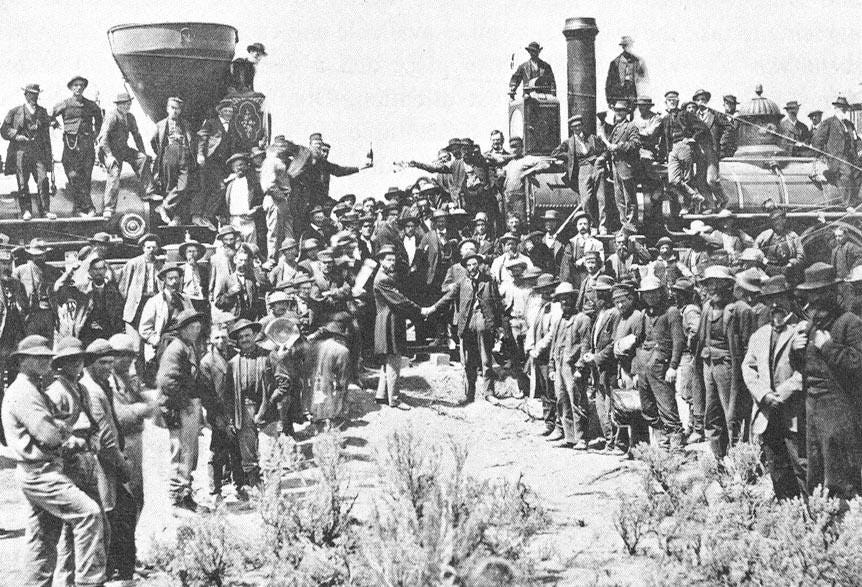
The builder does deserve to get rich. The question is whether getting there should hand one company a permanent deed to the horizon.
And the alternative is not exotic. It is a set of design choices, available now, while our future is still being built. Starlink’s cash flow could seed a planetary trust and not only private equity. A Mars settlement’s government could be something other than a wholly owned subsidiary of the company that sold the tickets. Orbital compute, once a civilization runs on it, could be chartered as public-interest infrastructure rather than a private toll road. The people who go could arrive as owners and citizens, not as employees and customers with very good benefits.
None of this slows the rocket down. It only decides who the rocket is for.
The Other Novels
There is, as it happens, another great series of novels about exactly this future — and it’s strange that the people building Mars in our lifetimes never reference them, since unlike the Culture, a finished paradise a thousand years out, this series is about the messy business of building that future in the first place.

Kim Stanley Robinson’s Mars Trilogy follows the first hundred settlers to Mars across two centuries, and what makes it the more interesting of the two is what the colonists fight about.
It’s politics, not engineering.
From nearly the first day Robinson’s First Hundred argue the questions the Sentient Sun never reaches: Who owns the land? Who owns the companies? Who governs a world no one has governed before?
In Robinson’s telling, Earth’s giant corporations chase the settlers across space, determined to make Mars one more place to be owned and worked for someone else’s account. They are the antagonists. A company-owned Mars, run from afar by the people who paid for the ships, is the villain of the most serious fiction ever written about settling our solar system.
The Martian revolution, when it inevitably comes, is less a war against Earth than a refusal to be property.
And what the settlers build instead is the part the Sentient Sun refuses to imagine: land held in common rather than owned, companies owned by the people who work in them, a government that belongs to everyone who breathes the air they bled to make. It is messy. The arguing never stops — and that’s the point.
Two series. Two futures. Identical technology — abundance, intelligence, the leap off Earth — and the only thing that differs is who ultimately owns it. Andreessen quotes the first while writing the brief for something uncomfortably close to the second’s villain.
Be clear: I’m for Mars. For ambition, for abundance, for intelligence and energy too cheap to meter, for the whole multiplanetary mission.
But that dream is too big to hand to a cadre.
The horizon is the most expansive idea humanity has, and the Sentient Sun spends it on the least expansive arrangement of power imaginable: a handful of owners, a dependent humanity, a frontier reserved for the few with the keys. Ambition about machines, married to a strange poverty of ambition about people — about how many of us get to be agents in this story instead of its grateful beneficiaries.
The Other Spreadsheet
In 1941, a young priest named José María Arizmendiarrieta arrived in Mondragón, a Basque town broken by the Spanish Civil War — poor, defeated, occupied. He had no capital and no rockets. What he had was a conviction: people thrive on owning a piece of the thing they build, not on bread handed down to them. He started a technical school. The school started a factory making paraffin stoves, owned by the workers. The factory started a bank to fund more factories the workers would own.11
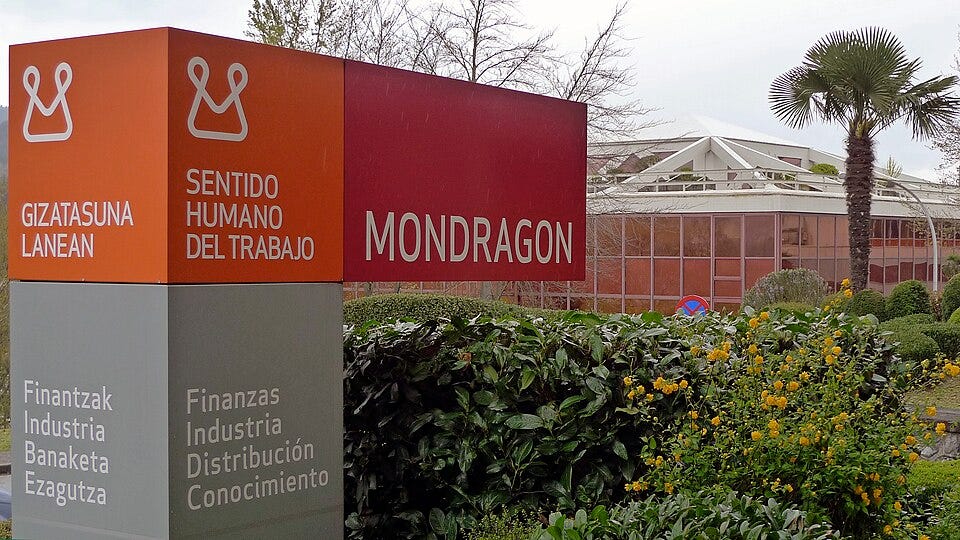
Today Mondragón is one of the largest employers in Spain — roughly 70,000 people across the group, many of them worker-owners who hold the firm rather than merely working for it.12 They argue among themselves constantly, and they have compromised their own ideals more than once. But for eighty years Mondragón has answered the question the Sentient Sun can’t ask, and answered it the other way: abundance belongs to the people who make it.
None of this means a Basque appliance cooperative copy-pastes onto Mars. It means something simpler and harder: enterprise, capital, and governance can be designed so the people who create the value own and govern it — and not only the workers, but the producers, the customers, the whole community the value flows through.
Mondragón is where Kim Stanley Robinson got the idea — by name. When his Martians sit down to write their constitution, the old scientist Vlad Taneev rises to defend the new economy: every enterprise a small cooperative, “owned by their workers and by no one else,” a world where workers hire capital instead of the other way around.
“Most of our microeconomy,” he tells the congress, “has been in successful operation for centuries in the Mondragon region of Spain.”13
The alternative Robinson’s settlers reach for on a new world already exists on this one — in a rainy corner of the Basque country, started by a priest with a conviction and no capital.
Mars was always a mirror. Banks and Robinson didn’t send us to other worlds to get us off this one. They did it to show us this one more clearly.
The fight over who owns the abundance isn’t waiting on Mars in the 2050s. It is here, now: in who owns the intelligence and the data centers and the land beneath them, in the retirement accounts that quietly bankroll the whole machine.
The off-world frontier is the romantic one. But the frontier that matters is our own imagination for how to own what we build — on the only world we actually live on.
Give people a stake, not a check.
Make the abundance common, the enterprises cooperative, the governance shared, and you get something like the Culture’s promise — abundance that belongs to everyone — built from the ground up, on our own, without waiting for benevolent gods to hand it down.
Keep it privately held and you get the oldest arrangement on Earth, lifted into orbit and lit like a cathedral: a few who own the light, and a vast, comfortable multitude permitted to stand in it.
We were promised a Culture.
Let’s not settle for a kingdom.
Further Reading
For the structural arguments, beyond the factual notes above. (The a16z essay itself and my own Regulatory Hacking are cited in the Notes.)
Iain M. Banks, the Culture novels — the essay’s hinge: a post-scarcity utopia that works only because its superintelligence is sovereign, not property. Start with The Player of Games and Use of Weapons; Look to Windward for the utopia at rest.
Kim Stanley Robinson, Red Mars / Green Mars / Blue Mars — the counter-model: settling a world as a problem of ownership and governance, not engineering.
William Foote Whyte & Kathleen King Whyte, Making Mondragón — the real-world proof that broadly held ownership can run at industrial scale.
G.K. Chesterton & Hilaire Belloc, on distributism — the older tradition behind the priest: the cure for concentrated capitalism is more owners, not a bigger state. The essay’s prescription is closer to this than to modern redistribution.
Fred Hirsch, Social Limits to Growth (1976) — why some goods (status, position, a say) can’t be mass-produced, however rich we get.
Milovan Đilas, The New Class (1957) — how ownership abolished on paper returns as a class that controls without owning. The warning that cuts both ways.
Aldous Huxley, Brave New World — abundance and contentment as instruments of control; the “right to be unhappy.”
Friedrich Nietzsche, Thus Spoke Zarathustra (the “last man”); Francis Fukuyama, The End of History and the Last Man — on recognition, and why comfort never satisfies the hunger to matter.
Jo Freeman, The Tyranny of Structurelessness (1972) — distributed power doesn’t maintain itself; even open systems grow informal elites unless you design against it.
The Moscow trips, the failed missile purchase, the spreadsheet, and the “raw materials are about two percent of the quoted price” calculation are recounted in Ashlee Vance, Elon Musk: Tesla, SpaceX, and the Quest for a Fantastic Future (Ecco, 2015), and retold in the Sentient Sun essay.
Musk’s $54,080 SpaceX salary and the performance-based vesting — a $7.5 trillion market-cap milestone and a permanent one-million-person Mars settlement — are set out in SpaceX’s 2026 IPO registration (Form S-1) and described in the Sentient Sun essay. (It is one tranche of a multi-target package.)
Marc Andreessen & Michael McGuiness, “SpaceX and the Sentient Sun,” a16z (a16z.news), June 15, 2026 — the essay this piece replies to. The post-merger mission statement (”…a sentient sun … and extend the light of consciousness to the stars”) is quoted there from the mission SpaceX adopted on absorbing xAI in February 2026.
Musk called the Culture novels “by far the best envisioning of an AI future … there’s nothing even close” in conversation at the UK AI Safety Summit, November 2023. SpaceX’s three Atlantic drone ships — Of Course I Still Love You, Just Read the Instructions, and A Shortfall of Gravitas — take their names from sentient starships in Banks’s Culture.
Per the Sentient Sun and SpaceX’s IPO disclosures: Anthropic pays roughly $1.25 billion a month and Google roughly $920 million a month for compute capacity at the former-xAI data centers SpaceX absorbed — about $26 billion a year between them. What they rent is GPU compute, not the models themselves.
SpaceX’s June 2026 IPO turned more than 4,400 current and former employees into millionaires, with roughly 400 crossing $100 million. Fortune and CBS News reported the case of Juan Hernandez, a welder hired in 2015 who took $10,000 in stock and held about 6,500 shares worth more than $1 million on the first day of trading.
Evan Burfield, Regulatory Hacking: A Playbook for Startups (Portfolio/Penguin, 2018), conclusion, “The Ultimate Regulatory Hacker.” The Tesla Gigafactory bidding war — seven states; roughly $1.4 billion in Nevada tax breaks and free land — is documented there and in Peter Elkind’s reporting for Fortune.
NASA awarded SpaceX a $1.6 billion Commercial Resupply Services contract on December 23, 2008, weeks before the company would have run out of money. Musk described the call — “I love you guys,” barely able to hold the phone — on 60 Minutes (2014).
The Pacific Railroad Act of 1862 granted private railroad companies vast tracts of public land; the Interstate Commerce Act of 1887, building on common-carrier law, bound the railroads to serve the public on non-discriminatory terms.
Outer Space Treaty (1967), Article I: the exploration and use of outer space “shall be … the province of all mankind.” Article II bars national appropriation. (The treaty binds states; it does not by itself resolve private commercial ownership.)
On Arizmendiarrieta and the founding of the cooperatives, see William Foote Whyte & Kathleen King Whyte, Making Mondragón (Cornell/ILR Press, 1988; rev. 1991). Arizmendiarrieta arrived in Mondragón in 1941 and founded a technical school in 1943; five of its graduates founded the first cooperative, ULGOR, in 1956 (making paraffin stoves, later the Fagor appliance brand); the cooperative bank, Caja Laboral, followed in 1959.
Mondragón Corporation employed 70,085 people across finance, industry, retail, and knowledge in 2024 — the largest employer in the Basque Country and the fifth-largest private employer in Spain (Mondragón Corporation; Co-operative News).
Kim Stanley Robinson, Blue Mars (Bantam Spectra, 1996) — Vlad Taneev’s speech to the constitutional congress: “all economic enterprises are to be small cooperatives, owned by their workers and by no one else,” and “most of our microeconomy has been in successful operation for centuries in the Mondragon region of Spain.”
I loved this piece. Such an important point but we’re all too busy being divided to seek any Commons.
KSR mentions Mondragon in Ministry for the Future too. So good.
I challenge the promise of abundance though. When we have more stuff we won’t suddenly be satisfied.
The earth is already abundant - it’s taking more that we needs that has created the ‘scarcity’
Thanks for the note! I didn't read it for the first time until a few years ago. It's such a fascinating thought experiment in the kinds of property rights and market relationships we might develop if we were able to reset on a blank canvas. And as I say in the piece, it's the wrangling and debates that the various fleshed out characters engage in that makes it so rich and realistic.