
I want to start with something simple, because I think we often make things harder than they need to be.
Humans are imperfect.
Almost all of us are doing the best we can with what we have. We all make mistakes. We all fail to live up to our own intentions. We all suffer in ways we don’t fully share. Most of us are lonelier than we admit. We lose our tempers and regret it. We rationalize decisions that sit a little uneasily with us. We love our kids deeply and still worry we’re failing them. We want dignity and status in the communities around us. We covet nice things, even if we define “nice” differently.
This isn’t a cynical view of humanity. It’s a compassionate one.
It means that any serious attempt to understand how people work together—in teams, in institutions, or across society—has to start with grace. Not because everyone is right. But because almost no one thinks they’re the villain in their own story.
That belief shapes everything I’m trying to do here.
I almost never encounter “bad people.”
What I encounter, over and over, are thoughtful, earnest, capable humans making decisions that make sense locally—inside the incentives, cultures, and constraints they’re operating within—but that add up to outcomes that feel deeply wrong at a system level.
That gap is where my curiosity lives.
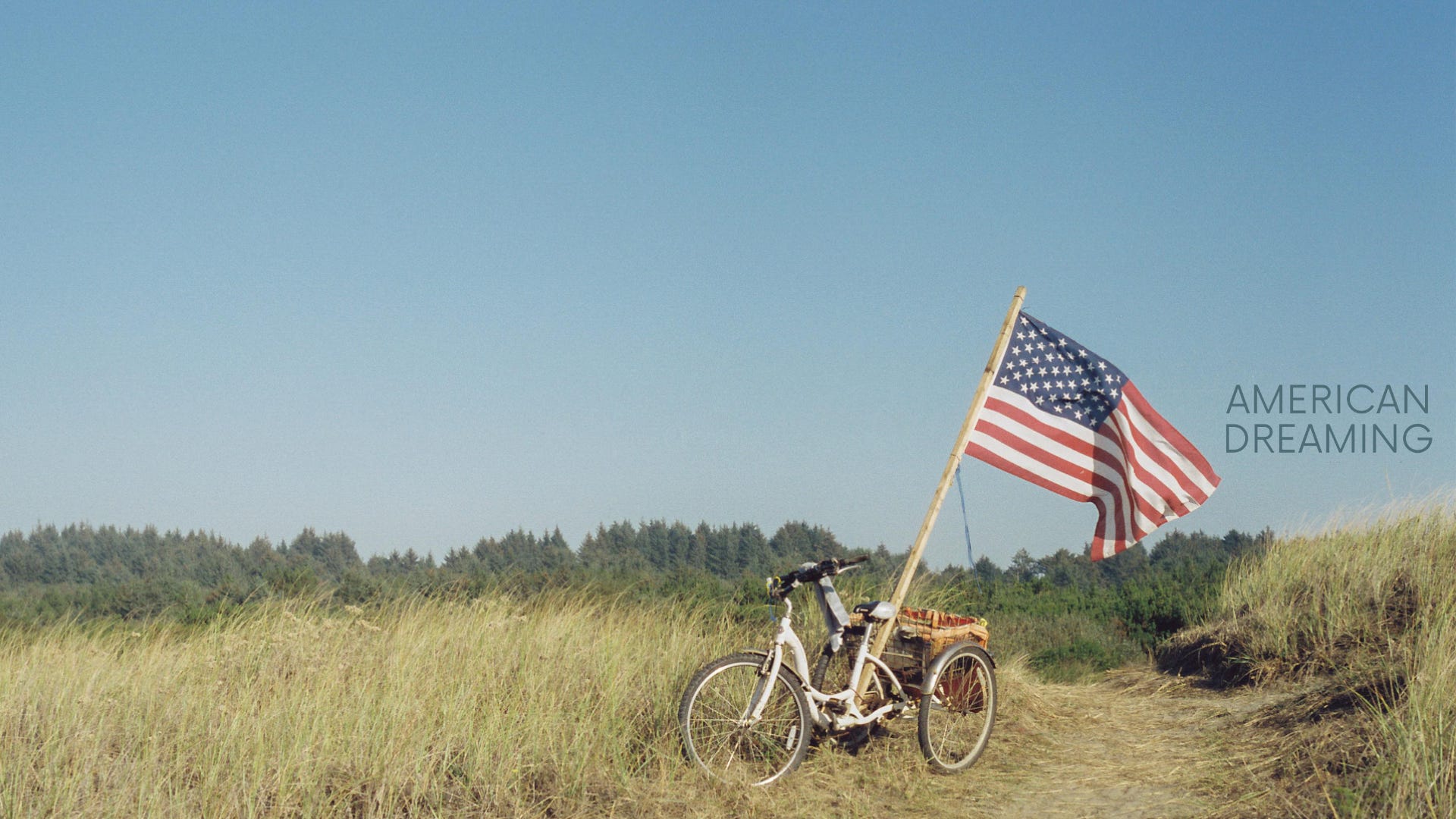
I’m much less interested in arguing about who’s right or wrong than I am in stepping back and asking: what kind of system would produce this behavior, at scale, from people who generally mean well?
Curiosity before judgment. That’s the posture of this project.
I’m going to make claims you may disagree with. If you do, tell me where your direct experience contradicts mine. That’s how this works.
Let me make that concrete with a few examples that are personal to me.
My grandfather helped deregulate the stock market. It was, at the time, a defensible decision. Markets were rigid. Capital allocation was inefficient. Risk was mispriced in ways that hurt growth and innovation. He wasn’t wrong.
But over time, a necessary corrective metastasized into something else entirely. Financialization stopped being a tool and became a culture. Incentives shifted. Time horizons shortened. Risk didn’t disappear, it moved to less visible places. We gained efficiency and liquidity, and we lost something harder to name: a lived relationship with real risk and long-term consequence.
I loved my grandfather. I still do. And I can hold two ideas at once: that his generation built something genuinely valuable, and that we, as inheritors of that system, waited too long to take responsibility for what it became.
We enjoyed the upside, but we delayed the maintenance. And now the repair work is harder.
My best friend’s father helped draft the Endangered Species Act. A remarkable achievement. A moral intervention that insisted the needs of natural systems mattered, even when markets didn’t account for them.
But over decades, that tool hardened. It became absolute in places where tradeoffs were unavoidable. In some cases, it now stands in the way of building the very infrastructure we need to address climate resilience at scale.
I see the pattern in my own work. For the last fifteen years, I’ve advised and invested in startups with the hope that high-growth companies could align with the public interest.
The bet was simple: build useful things—cleaner energy, better health diagnostics, better tools for learning—and the returns would follow.
But I watched a recurring mismatch between intent and structure. The funding model rewarded speed and scale, even when the work required patience, trust, and service. Founders who wanted to stay close to a community often felt pressure to change the aperture, raise prices, cut support, or monetize attention.
No villains. Just incentives that made certain choices feel “rational” in the moment, and left a trail of second-order costs.
That same trap—where immediate pressures crowd out the wider view—defines how we currently govern.
We have lost the capacity to look at the whole picture. Instead, we react to specific fires as they arise. We stop solving problems and start managing symptoms. Take the debate over student debt.
When broad student debt relief was announced, I understood the impulse. Higher education has degraded. People thought they were signing onto a fair deal: take on debt, get skills, gain stability. But it’s become incoherent for many. That produces real grievance.
But here’s the harder truth: that grievance is not unique.
If you grew up in a coal town in Appalachia that was hollowed out by shifts in energy systems and global trade, your deal collapsed too. If you grew up in an urban neighborhood with a failing school system, your deal never really existed. If you’re a farmer sitting on land that looks valuable on paper but yields a shrinking household income year after year, your risk is very real and very present.
By elevating one grievance over others, but without doing the hard work to reform the underlying system that produced all of them, we didn’t heal much. We accelerated polarization. We told one group “we see you” while implicitly telling others “wait your turn.” The system stayed broken. Trust eroded further.
Again: local sense. Global failure.
This pattern shows up everywhere once you start looking for it.
I became fascinated by regenerative agriculture not because it’s “green,” but because it’s an interesting systems problem. At some point, someone told me I needed to stop reading papers and start spending time with farmers. So I did.
I went to Iowa. I sat at kitchen tables. I rode in pickup trucks. I listened.
These farmers understood soil science, nitrogen cycles, rainfall variability, and commodity markets in extraordinary detail. One old guy told me, “Well hell, the combines drive themselves these days, but we still have to be in them. Leaves a lot of time for YouTube.”
They’d describe collapsing nitrogen absorption rates and erratic weather patterns, then say in the next breath, “Look, we don’t buy the climate change hoax, but we gotta do things differently.”
From the outside, that sounds like contradiction. From the inside, it sounds like people who are adapting rationally inside a system that’s been talking at them, not with them, for decades.
Then I’d fly to Climate Week. Panel after panel. Jargon-dense conversations about regenerative agriculture. Mostly ex-consultants. Not a farmer in sight. And the quiet subtext, often with genuine good intention, was that the farmers were the problem, not the solution.
That’s how trust gets destroyed. It’s not through malice, but through distance.
I love country music for the same reason I love systems thinking when it’s done right.
Country music is three chords and the truth. It doesn’t pretend the human experience is tidy. People love and divorce. Parents fail and try again. Jobs disappear. Kids still need Christmas presents. Sometimes people make one terrible decision and spend the rest of their lives regretting it.
That’s the America I recognize.
I want American Dreaming to sound like that. Not in tone, but in honesty.
This isn’t a newsletter about villains. It’s not a manifesto. It’s not a one-way broadcast from someone who thinks he has “the answer.”
It’s an invitation to step back together and ask why so many people, across class, geography, race, and profession, feel like they did what they were supposed to do, and the system didn’t deliver on its side of the deal.
I think our institutions used to translate effort and risk-taking into stability and opportunity more reliably than they do now. Meaning, if you took the risk and did the work, life usually got more predictable, not less. Not for everyone, some have always been unfairly excluded, but for most people. If that makes you pause, good.
We’ll unpack it slowly, concretely, and from multiple angles. Nothing here depends on you taking my word for it.
American Dreaming is a place for diagnosis before solutions. For tradeoffs rather than ideology. For looking past our own fence line, especially for those of us who know our own corner of the world deeply but rarely see how things look from where others are standing.
If it works, the ideas here won’t feel like mine. They’ll feel like insights you arrived at yourself, with some healthy debate along the way.
That’s the journey I want to take. Together.
Beautiful framing, Evan.
I agree, no villains, although that judgement game is one I slip into very easily when I’m feeling under resourced.
I don’t disagree with anything you’ve said.
I do, however feel that ‘the system’ is doing what it was designed to do (which was not to serve the wellbeing of all people, life and planet).
Maybe an approach like donut economics may have fared better, with indigenous wisdom eg 7 generations thinking. Who knows, we seem to be cyclical beings, like everything else.
This Jan has been such a huge turning point that I’m not messing around trying to make ‘the systems’ change, anymore. They won’t allow it.
My energy is going into creating new ways of being, and remembering old ones.