
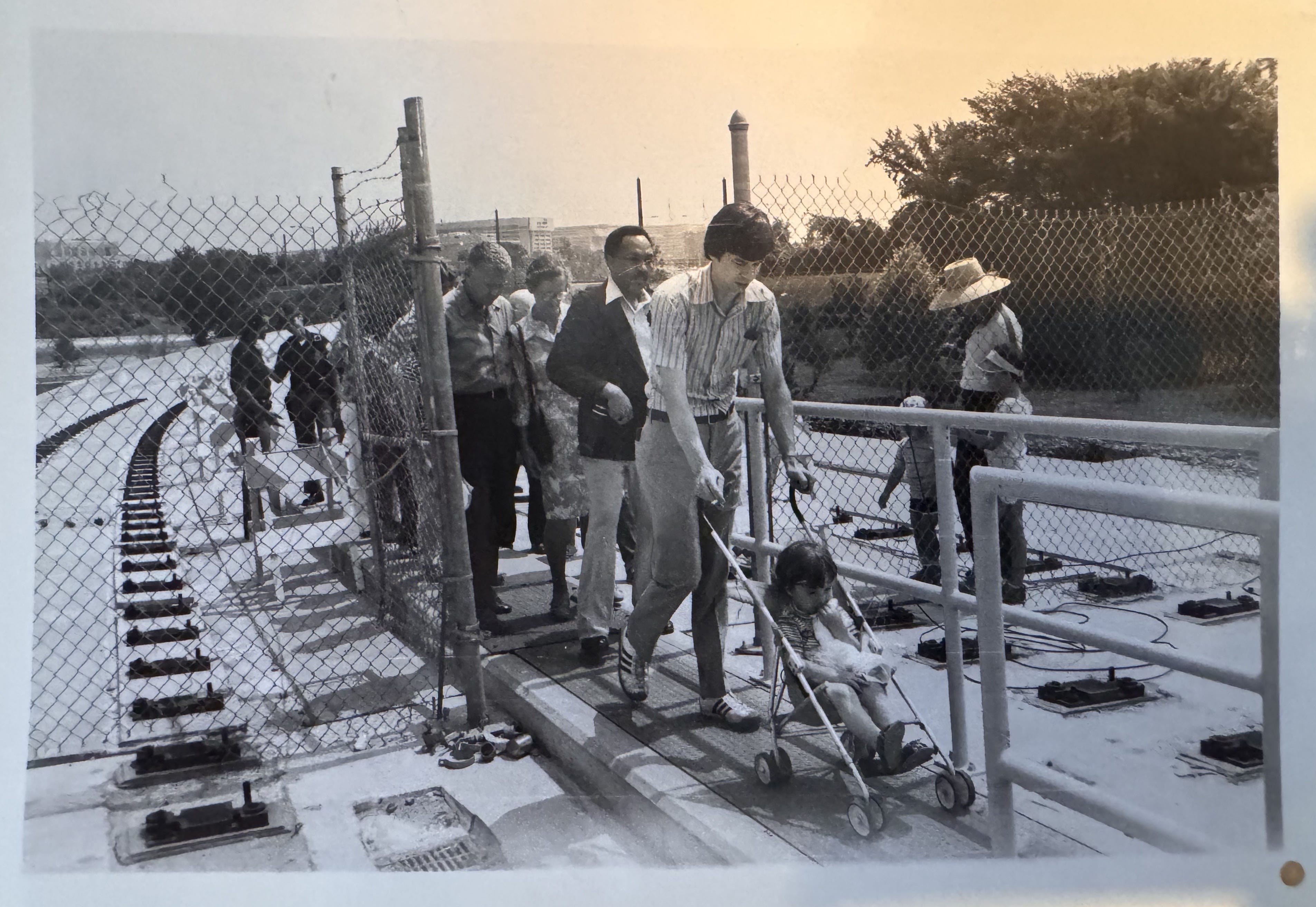
My dad joined the Washington Metropolitan Transit Authority, or Metro, in 1976, the year I was born.
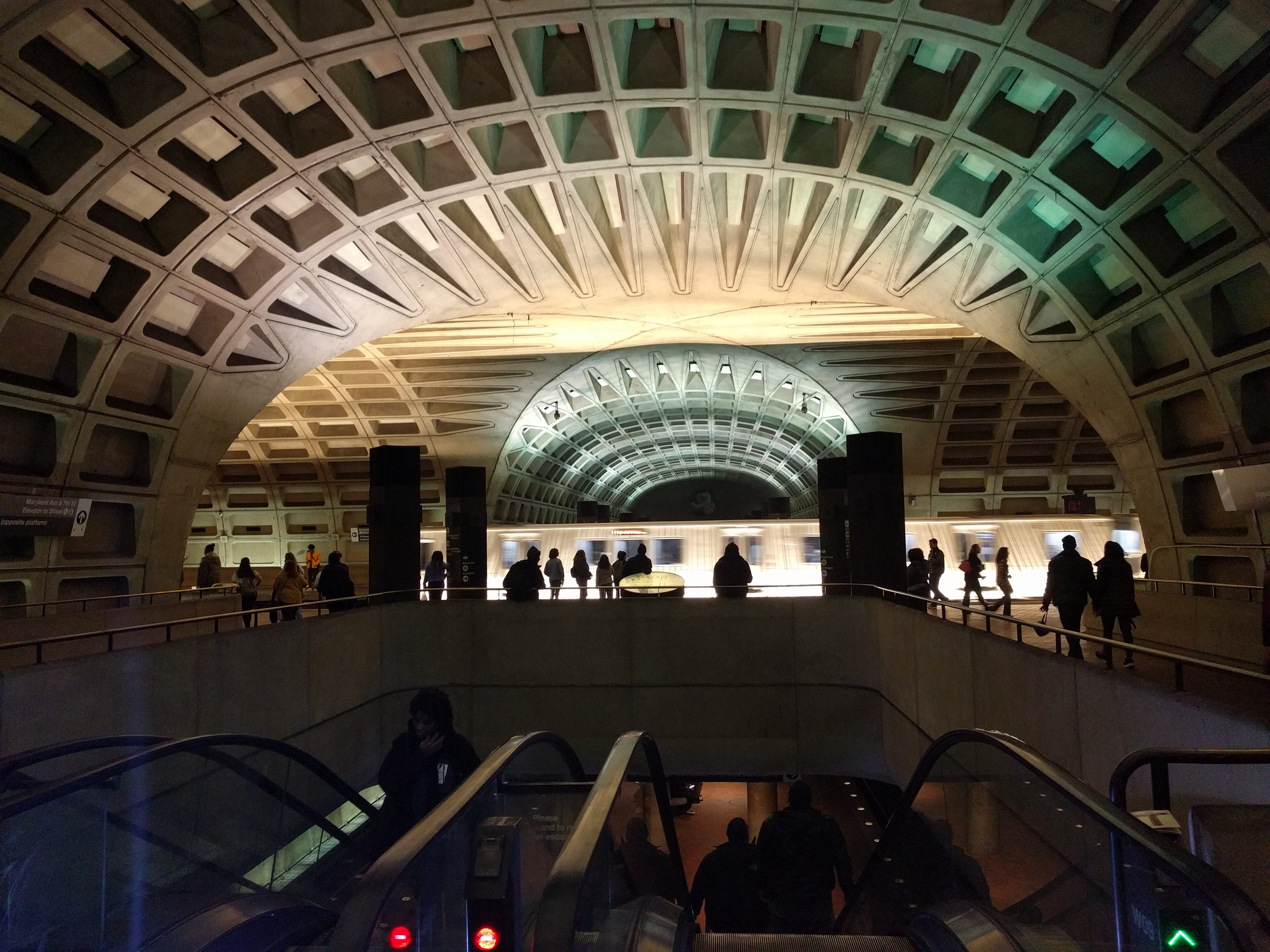
He moved to Washington for the opportunity. He was twenty-six and about to be a father and knew he needed to get a job that could support a family. But he wanted to be a part of building something. The Metro was going to be the best subway system in America. The station architects were competing with Grand Central. The vaults, the coffered concrete ceilings, the bronze — the aesthetic reflected the ambitions of the rapidly growing Nation’s Capital. But what my father believed in wasn’t the architecture. It was the idea underneath it.
In the late 1960s, a cross-racial coalition — Black residents of Brookland and Anacostia, white residents of Takoma Park and Georgetown — fought the highway plans that would have bulldozed their neighborhoods to carry suburban commuters into the city.1 They fought for transit instead. The Great Society funding that LBJ had shepherded through Congress gave the city the mechanism: connect the workers who lived in those neighborhoods to the jobs that were spreading outward to the suburbs.2 A city where everyone rode the same train was a different kind of city. My father believed that. He spent the next thirty-one years trying to make it true.
The rapid construction of the Metro system was the backdrop for much of my childhood. Dinner table stories were about the backroom machinations to pass the first gas tax in Virginia to fund transit. The pictures in my baby books are often of my dad pushing me in strollers through the unfinished Rosslyn tunnel or along bridges on the Blue and Orange Lines before they opened. My dad’s frequent evenings away at community town halls with the Northern Virginia Transit Commission.
By the time I was in my early twenties, my father had spent two decades in government affairs. He was the person who went to Annapolis and Richmond and the Hill and convinced people to fund the expansion of the Metro system. He knew where every dollar came from and what it had taken politically to get them.
I have a specific, poignant memory as a young man who assumed he’d figured out how the world worked. I was sitting at the kitchen table at his house. He was making dinner. The Metro system was starting to break down in small ways — delays, equipment failures, the kind of thing that riders dismissed as inconvenience. I was half-needling him, half-curious. Why wasn’t it getting fixed? Why didn’t he do something about it?
He told me the truth: nobody will do anything until someone dies. And when someone dies, it will cost ten times what it would have cost to maintain it properly all along. It will then take a generation to work right again, if it ever truly does. And the same people who refused to fund the maintenance will hold hearings and press conferences, and it will be Metro leadership that gets publicly shamed and fired.
I was twenty-something. I heard him but I didn’t quite understand that he was sharing a weary truth about how our systems often work rather than just his own frustration at what he couldn’t get right for Metro.
Rhode Island Avenue
On Friday, June 19, 2009, LaVonda King picked up the keys to her new salon.
She was twenty-three. She had graduated from Largo High School in Prince George’s County six years earlier, tried college in Ohio, come home and gone to beauty school. Her mother did hair, so she decided to do hair. She had been saving. Her plan was the salon, then a car, then an apartment for herself and her two sons, who were two and three. That evening she celebrated with friends at Wild Wings, her hair done up in a bun, still styled from the night before.
Three days later, on a Monday afternoon in late June, she boarded a Red Line train headed inbound to pick up her sons from day care.
The train was heading inbound through the afternoon rush. She was in Car 1079, a 1000-Series Rohr car, one of the original fleet from the day the Metro opened, now thirty-three years old.
Between Takoma and Fort Totten stations — above ground, passing through the Riggs Park neighborhood of Northeast DC — the train struck a stopped train in front of it. Car 1079 overrode and telescoped on top of the rear car of the stopped train.
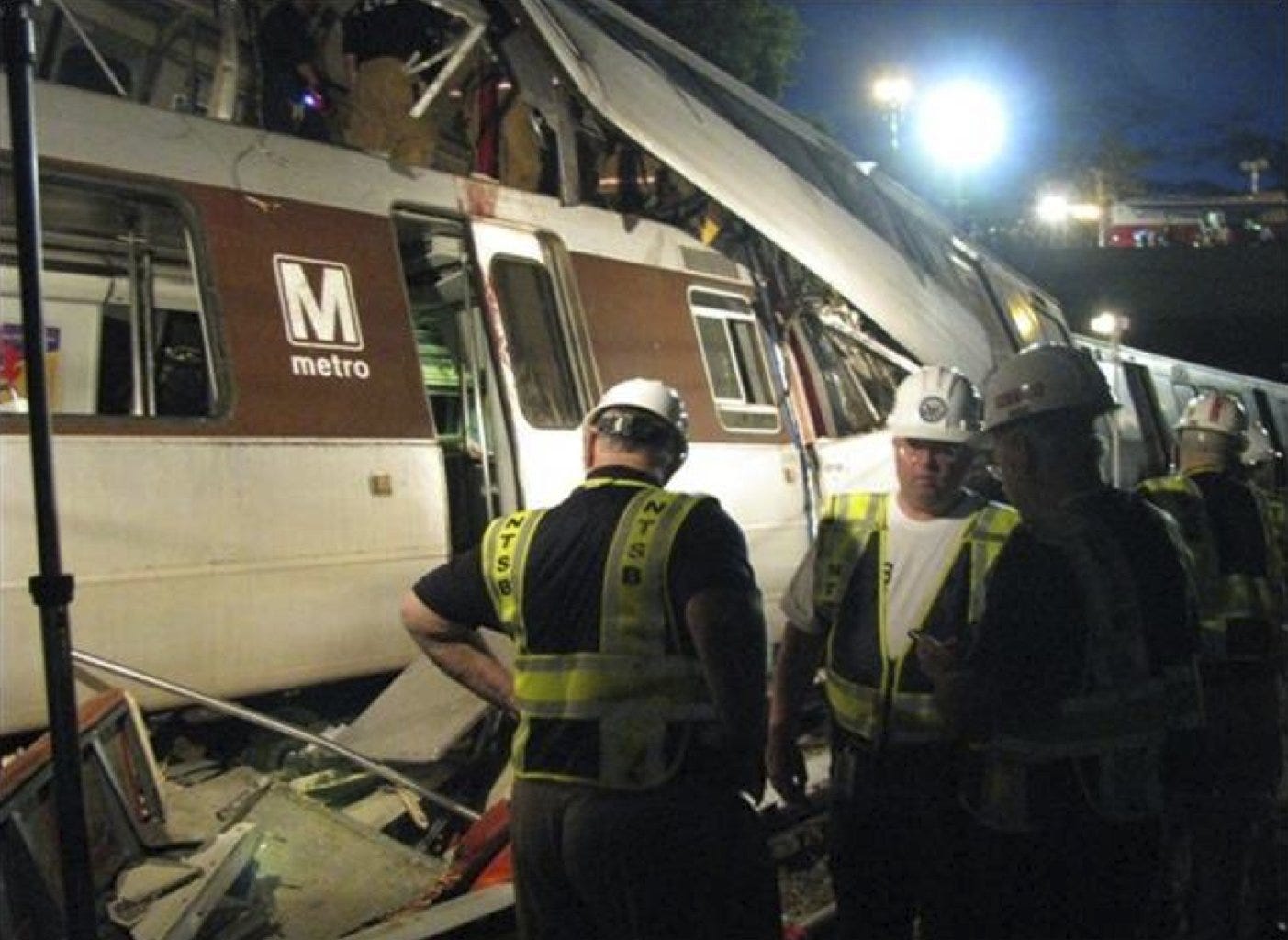
LaVonda King spoke to an Army chaplain — his first day on the job, riding the same car — as she died.
She had held the keys to a future for her and her sons for three days.3
Fort Totten
The track circuit at that section of the Red Line — circuit B2-304 — had been malfunctioning since December 2007, eighteen months before the crash.
The circuit’s job was to detect whether a train was occupying that section of track. When it failed, the train on that section became invisible to the Automatic Train Control system, the master control system for the entire Metro system. The system saw clear track and commanded the following train at full speed.
On June 17, five days before the crash, maintenance crews replaced the impedance bond on the circuit. During installation, the circuit began intermittently losing detection — “bobbing,” in the technical language. A work order was opened but there was a backlog and not enough maintenance crews. The circuit was still failing on June 22. Train 214 came to a complete stop within it. Train 112 was commanded to proceed at 55 miles per hour. Operator Jeanice McMillan applied the emergency brake when the stopped train came into full view. The train still hit at 44 miles per hour.
Nine people died. More than seventy were injured. Jeanice McMillan was one of them. She had held the doors for the last passenger to board — a doctor running for the train.
The National Transportation Safety Board spent a year on the investigation. Their findings were careful and specific. The circuit had been failing for 18 months. The enhanced verification test developed after a near-collision four years earlier had never been institutionalized. When investigators started looking, six other circuits across the system showed similar anomalies. Maintenance technicians were unfamiliar with the protocol.
The Metro system was designed to run under Automatic Train Control from the day it opened. ATC was not a feature added to an existing system, it was the foundational architecture. Train spacing, operating speeds, safe stopping distances: all of it was calculated assuming central computer control. The system was engineered so that no train could occupy a section of track without the computers knowing, and no following train would be commanded into that section. That was the safety guarantee built into the physical infrastructure itself.
One line in the Federal Transit Administration audit, quoted in the NTSB report, captures the whole thing: “There is no formal process for identifying and managing the likely safety impacts of budgetary decisions affecting maintenance.”
The agency had no process for even making that evaluation.4
Metro Center
From 1976 when the Metro opened until 2018 — forty-two years — it operated without dedicated capital funding.
It was not underfunded. It was without any dedicated funding stream. The District, Maryland, and Virginia each appropriated what they chose each year, based on whatever else was competing for the budget: a bridge, a school, or a Governor’s pet political priority. WMATA went to Annapolis and Richmond and the Hill, year after year, and made the case. Sometimes it worked. Sometimes it didn’t. But the maintenance queue grew.
My dad did that work for most of his career. He knew exactly what the persistent funding gap meant in practice.
Deferred maintenance compounds. A track circuit that costs $40,000 to fix in 2001 costs $400,000 to fix after an accident. The work order gets written. The parts inventory never gets built. A car flagged by NTSB in 2006 stays in service because the replacement timeline slips. The budget cycle comes around again. But maintenance has no ribbon to cut.
The 1000-Series cars — the ones that formed Car 1079 — had been in service since 1976. In 2004, a 1000-Series car rolled backward into Woodley Park station and telescoped into an in-service Red Line train at the platform. Nobody died but twenty people were injured. Safety officials estimated that had the out-of-service train been carrying passengers, seventy-nine people would have died.
NTSB issued another recommendation in 2006: accelerate retirement, or retrofit with crashworthiness protection. WMATA’s response was classified by the NTSB as “Closed—Unacceptable Action.” The cars would stay until a 2014 replacement target.
Then that target slipped.5
Takoma
The crash that killed LaVonda King happened in Riggs Park.
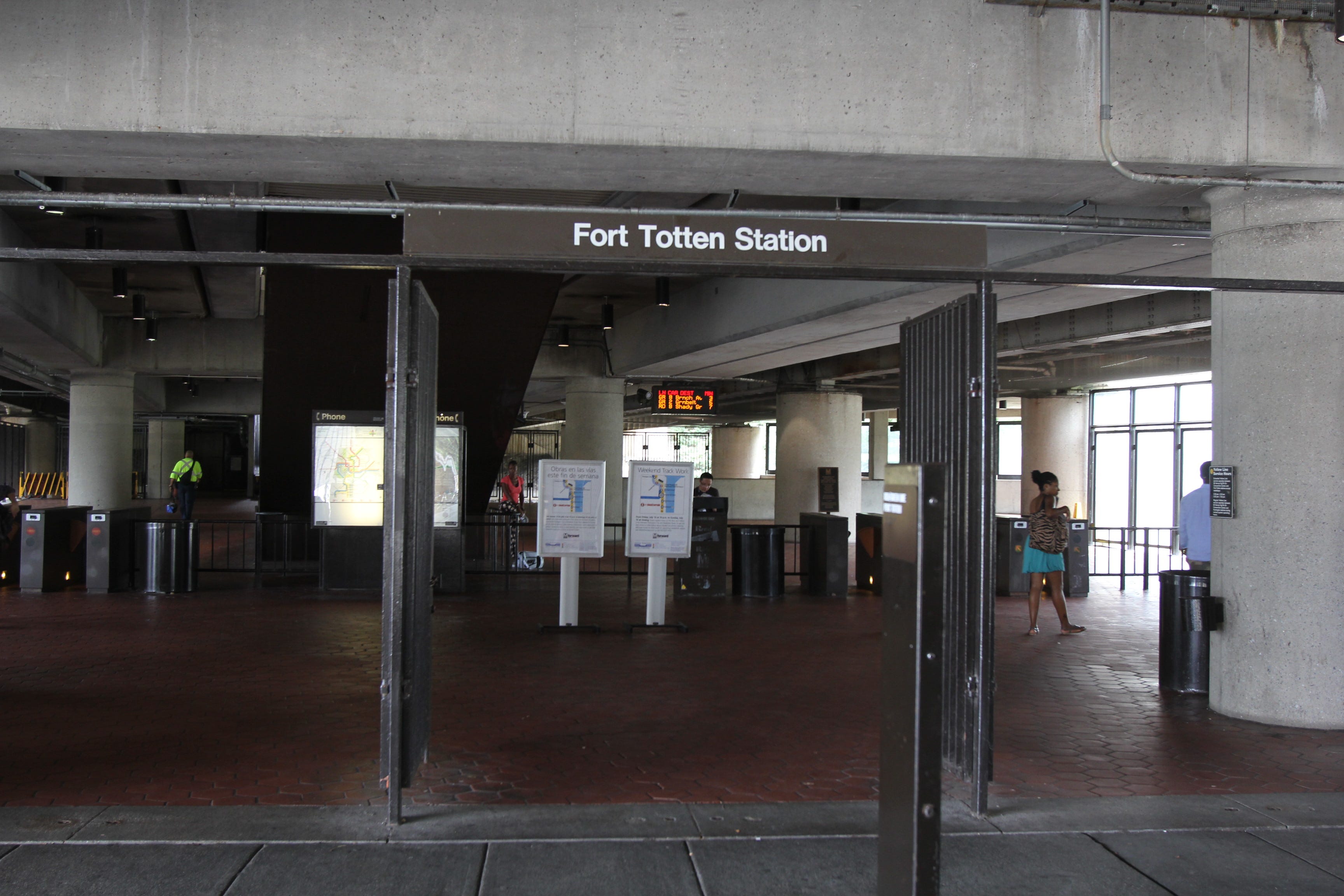
By the early 1980s, Riggs Park was home to a large middle-class Black population. The Census tract immediately around Fort Totten station is 86.5% Black. The corridor the tracks pass through is 72% to 88% Black, with median household incomes between $46,000 and $61,000 — below the DC median, far below the $92,000 median in Montgomery County at the suburban Maryland end of the same Red Line.6
The system was built from the inside out. The first train ran on March 27, 1976, on the Red Line — from Rhode Island Avenue in Northeast DC, through downtown, to Farragut North. The Green Line was designed to connect Anacostia and Southeast DC to downtown. National Airport in Arlington connected in 1977. The Red Line extended to Silver Spring in Montgomery County in 1978. The system grew outward, station by station, and with each expansion the political weight shifted.
WMATA’s board includes representatives from DC, Maryland, and Virginia with roughly equal weight. The oldest sections of the system were in DC. Most of the new expansion was in Virginia and Maryland. The board that resulted gave the jurisdictions with the newest infrastructure roughly equal say over the maintenance of the oldest, which served the communities the system was originally designed to reach.
The result: a circuit on aging track was malfunctioning for eighteen months, and no one fixed it.
After the crash, WMATA suspended Automatic Train Operation system-wide — the automated driving function that had controlled every train since the system opened. The trains ran on manual. The ATO was not restored on the Red Line until December 2024. Fifteen years running the system's oldest trains by hand, on the line it was built to run automatically.7
Capitol South
Congressional hearings followed the crash. Press conferences. WMATA General Manager John Catoe — who had stated the night of the accident that “the system is safe” — resigned under pressure in January 20108, after months of brutal articles in the Washington Post. The policymakers who had spent thirty years deciding that maintenance was someone else’s problem were the loudest voices at the microphones.
My dad watched it on television. He had retired two years before the crash.
His phone rang all day. Friends still inside the system. People who had spent their careers building it, maintaining it, making the case year after year to the people with the checkbooks. They all felt the same thing: grief, and the particular frustration of having known but been powerless to stop it.
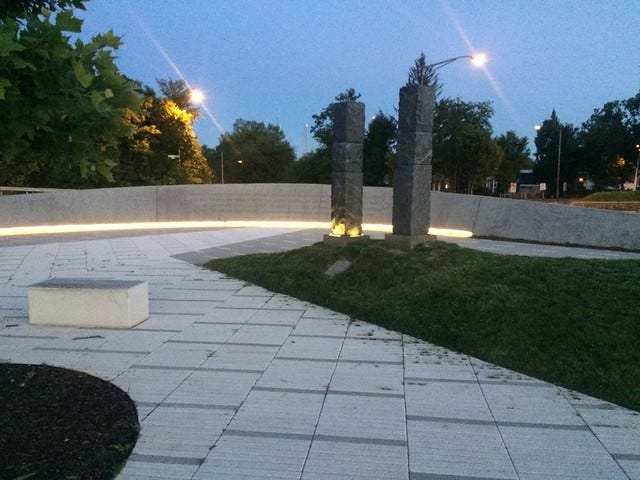
There is a small park near the crash site called Legacy Memorial Park. It opened on June 22, 2015 — the sixth anniversary. Nine sculptures, one for each person who died. No Metro officials attended the dedication. And no officials from Virginia or Maryland.9
L’Enfant Plaza
What finally moved the jurisdictions was not Fort Totten.
In January 2015, smoke filled a tunnel south of L’Enfant Plaza. Passengers sat for forty-five minutes. Carol Glover, sixty-one, a federal contractor riding home after work, died of smoke inhalation.10 L’Enfant Plaza is in the center of the city. The Yellow and Green Lines carry downtown workers and Virginia commuters. Within nine months, the Federal Transit Administration assumed direct safety oversight of WMATA — the first time the federal government had taken over a local system’s safety function.11
The jurisdictions noticed.
The year of the Fort Totten crash, the National Academies had published a comprehensive survey of transit funding mechanisms — a roadmap for the structural fix WMATA needed.12 The roadmap existed for six years but the political will did not.
In 2018, the District, Maryland, and Virginia agreed to the Capital Funding Agreement: $500 million per year in dedicated capital, the first stable funding stream in WMATA’s forty-two-year history.13
He had been right about everything: who would die, what it would cost, who would hold the press conferences. He predicted it at a kitchen table a generation before it happened, from inside the structure, watching the gathering conditions he described.
What twenty years of trips to Annapolis and Richmond and the Hill could not fix was the structure itself. Three jurisdictions with roughly equal weight, regardless of who bore the highest ridership load or lived nearest the tracks. The communities that needed the system most had the least leverage over whether the oldest sections were maintained.
The Capital Funding Agreement did not change that governance structure. What it changed was the money. And the money was enough to make the system work again. WMATA has had forty-six consecutive months of ridership growth.14 In 2025, the American Public Transportation Association named it transit agency of the year, citing the progress since 2009.
The question the structure has never adequately answered is a simple one: maintained for whom, and by whose decision. LaVonda King lived in the Kenilworth neighborhood of Northeast Washington. She took public transportation everywhere, including to pick up her sons. She had no other option.
Suggested Sources
On deferred maintenance cost escalation:
American Society of Civil Engineers, Failure to Act: The Economic Impact of Current Investment Trends in Public Transportation Infrastructure (ASCE, 2011). NTSB RAR-10/02 documents the direct costs of not acting on prior safety recommendations.
On WMATA governance and political leverage:
WMATA Compact, as amended (Pub. L. 89-774, 1966). Sanchez, Thomas W., Rich Stolz, and Jacinta Ma, Moving to Equity: Addressing Inequitable Effects of Transportation Policies on Minorities (Civil Rights Project, Harvard University, 2003).
On transit funding as a structural equity problem:
Garrett, Mark, and Brian Taylor, “Reconsidering Social Equity in Public Transit,” Berkeley Planning Journal 13 (1999). Bullard, Robert D., Glenn S. Johnson, and Angel O. Torres, eds., Highway Robbery: Transportation Racism and New Routes to Equity (South End Press, 2004).
On the gap between who bears the costs of deferred maintenance and who governs:
The WMATA Compact itself is the primary source — the governance structure it created is the argument.
DC freeway revolt, cites Zachary Schrag’s The Great Society Subway
Urban Mass Transportation Act of 1964, same source
LaVonda “Nikki” King, 23, of Northeast Washington (Kenilworth neighborhood). Graduated Largo High School, Prince George’s County, 2003. Signed paperwork for LaVonda’s House of Beauty in Forestville on June 19, 2009. Sons ages 2 and 3. The Army chaplain who was with her as she died was Maj. David Bottoms, his first day riding the Metro. “Crash Victims Came From All Walks of Life,” Washington Post, June 24, 2009.
National Transportation Safety Board, Collision of Two Washington Metropolitan Area Transit Authority Metrorail Trains Near Fort Totten Station, Accident Report NTSB/RAR-10/02. Washington, D.C., 2010. The FTA audit quote appears at p. 65. Circuit failure history and “bobbing” terminology documented in NTSB investigation docket DCA09MR007.
NTSB Safety Recommendations R-06-1 and R-06-2 (to WMATA) and R-06-3 through R-06-6 (to FTA), issued April 19, 2006. R-06-2 specifically recommended accelerating retirement or retrofitting the 1000-Series cars with crashworthiness protection. WMATA’s “Closed—Unacceptable Action” classification confirmed in NTSB RAR-10/02.
U.S. Census Bureau, American Community Survey, 2005–2009 5-year estimates. Census tract 18.01 (Fort Totten station area): 86.5% Black, median household income approximately $50,000. Montgomery County median household income (2009): approximately $90,000.
WMATA suspended Automatic Train Operation (ATO) — the automated driving function — systemwide after the crash and operated in manual mode until 2024–2025. Red Line ATO restored December 2024; Green/Yellow May 2025; Blue/Orange/Silver June 2025. Washington Post, December 2024.
Catoe stated “the system is safe” at a press conference the evening of June 22, 2009, with nine confirmed dead. He resigned January 22, 2010. Washington Post, June 23, 2009; January 22, 2010.
Legacy Memorial Park, intersection of South Dakota Avenue and New Hampshire Avenue, NE. Sculptor Barbara Liotta; architects Lucrecia Laudi and Julian Hunt (Hunt Laudi Studio). DC government attended; WMATA did not send representatives. DCist, June 22, 2015; DC.gov press release, June 22, 2015.
Carol Glover, 61, federal IT contractor. Train 302 stopped in the tunnel south of L’Enfant Plaza; passengers trapped approximately 45 minutes. 84 hospitalized. NTSB Accident Report DCA15FR004, 2016.
Acting FTA Administrator Therese McMillan: “This is the strictest level of federal safety oversight ever placed on a rail transit agency.” Federal Transit Administration press release, October 1, 2015.
Transportation Research Board, Local and Regional Funding Mechanisms for Public Transportation, TCRP Report 129. National Academies Press, 2009. doi:10.17226/14187.
WMATA, “Capital Funding Agreement Signed by DC, Maryland, and Virginia,” May 2018.
Federal Transit Administration, National Transit Database, WMATA Agency Profile (2024). Metrorail: 123.3 million trips in FY 2024, a 27% increase over FY 2023, via transit.dot.gov/ntd. American Public Transportation Association, “WMATA Named 2025 Public Transportation System of the Year,” press release, 2025.
Smart man.